Introduction
Picture this: it’s a rainy Thursday evening, the lights flicker in the kitchen, and the only thing that can turn a soggy week into a triumph is a plate of sloppy joe glory. I was staring at a half‑finished batch of burgers that had turned into a greasy mess, and my friend dared me to turn it into something that would make the whole house smell like a carnivore’s dream. I laughed, grabbed the ingredients, and the kitchen exploded with sizzling onions, garlic, and a splash of olive oil that filled the air with a savory perfume. The moment the ground beef hit the pan, the sizzle was so loud it sounded like applause, and the aroma started to weave a spell over the room. That night, I discovered a version of sloppy joe that was so rich, so cheesy, and so comforting that it felt like a hug in a sandwich.
From the first crack of the crusty baguette to the final swirl of melted cheddar, every element in this recipe is designed to create an orchestra of flavors. The crunch of the bread, the melt of the cheeses, and the depth of the tomato base all combine to produce a dish that is both indulgent and surprisingly balanced. If you’ve ever tried a sloppy joe that tasted like it was rushed or lacked depth, this is the antidote you’ve been craving. I’ll be honest — I ate half the batch before anyone else got to try it, and the second round was even better. That’s the power of this recipe: it’s so addictive that you’ll find yourself reaching for the next spoonful without even realizing it.
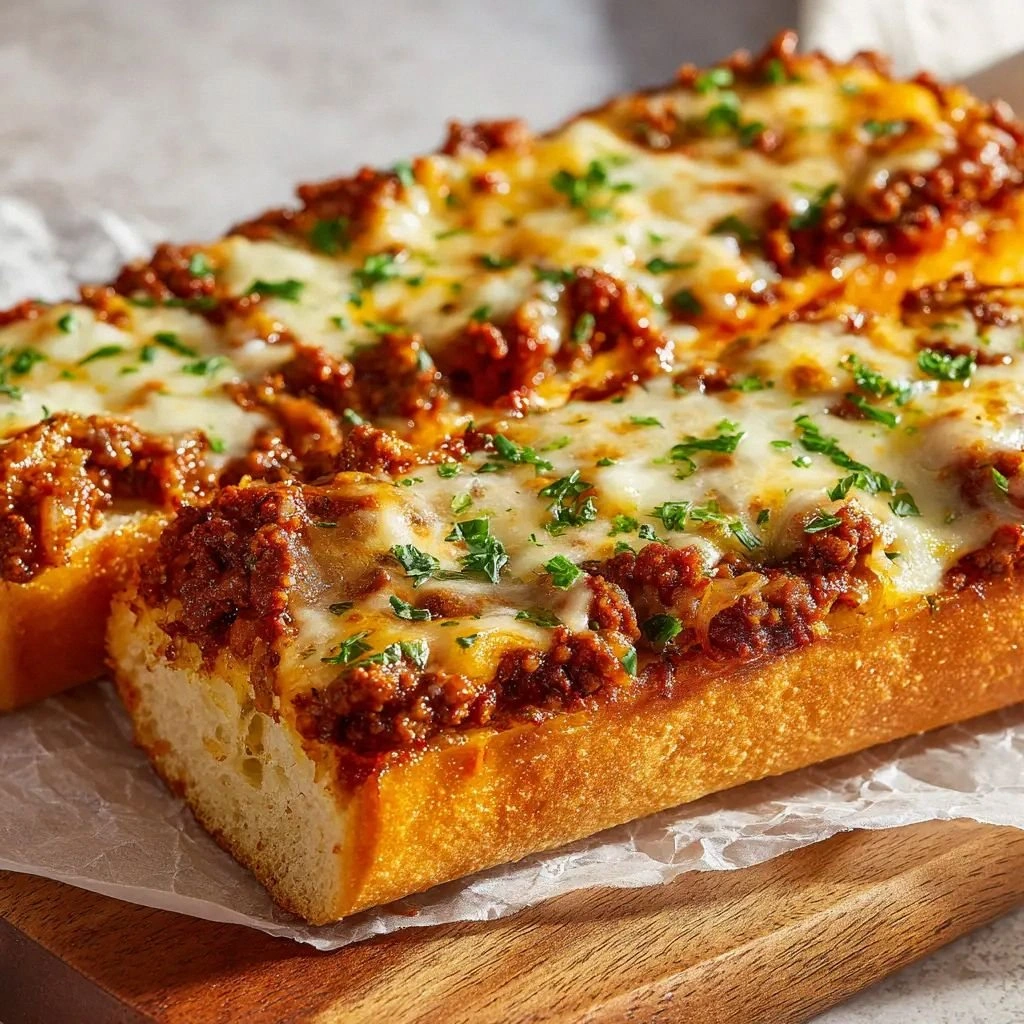
What sets this version apart is not just the generous layers of cheese or the buttery baguette, but the subtle twists that elevate the classic to something that feels brand new. I dared you to taste this and not go back for seconds, and I can’t guarantee you won’t. The sauce is thickened with tomato paste and a splash of beef broth, giving it a silky texture that clings to every bite. The cheddar and mozzarella blend creates a molten, gooey finish that contrasts perfectly with the crispy edges of the bread. And the final garnish of fresh parsley adds a pop of color and brightness that lifts the whole dish.
If you’ve ever struggled with a sloppy joe that turns out too watery or too bland, you’re not alone — and I’ve got the fix. Picture yourself pulling this out of the oven, the whole kitchen smelling incredible, and the first bite melting your tongue. The moment the cheese stretches, you’ll realize that this is hands down the best version you’ll ever make at home. Let me walk you through every single step — by the end, you’ll wonder how you ever made it any other way.
What Makes This Version Stand Out
- Cheese Layer: The combination of mozzarella and sharp cheddar creates a gooey, melty experience that is both comforting and indulgent. The cheese not only adds richness but also acts as a binder, holding the sauce together. The result is a sauce that coats the bread like velvet, making each bite a luxurious affair.
- Baguette Texture: A large crusty French baguette provides a sturdy yet airy base that absorbs the sauce without becoming soggy. The crust offers a satisfying crunch, while the soft interior soaks up the flavors, creating a perfect balance between texture and taste. This contrast is what turns a simple sandwich into a memorable meal.
- Ingredient Quality: Using fresh garlic, a real beef broth, and high‑quality cheeses elevates the dish beyond the usual supermarket staples. Each component brings its own depth, and the synergy between them makes the sauce more complex and flavorful. The result is a dish that feels elevated, even though it’s built from everyday pantry items.
- Make‑Ahead Potential: The sloppy joe sauce can be prepared a day in advance, allowing the flavors to meld and intensify. When you reheat it, the sauce thickens further, and the cheeses melt into a decadent, cohesive layer. This makes it an excellent choice for meal prep or last‑minute dinner parties.
- Crowd Reaction: Friends and family who have tried this version often remark that it’s “the best sloppy joe they’ve ever had.” The combination of savory, sweet, and tangy flavors creates a universally appealing profile. The dish is also kid‑friendly, making it a safe bet for family gatherings.
- Flavor Complexity: The sauce’s foundation of tomato paste, ketchup, and Worcestershire sauce brings depth, while the brown sugar adds a subtle caramelized sweetness. The garlic and onions provide aromatic undertones, and the pepper adds a gentle heat. Together, these layers create a taste profile that is far from ordinary.
- Visual Appeal: The golden melted cheese and the bright green parsley garnish give the dish a vibrant look that makes it Instagram‑worthy. The contrast between the dark sauce and the light bread makes every bite look as good as it tastes.
- Versatility: Whether you serve it on a baguette, a roll, or even as a pizza base, this recipe adapts effortlessly. The sauce can also be used as a topping for baked potatoes or a filling for stuffed peppers. The possibilities are endless.
Alright, let's break down exactly what goes into this masterpiece...
Inside the Ingredient List
The Flavor Base
The foundation of any great sloppy joe sauce lies in its flavor base, and this recipe takes it to the next level with a blend of tomato paste, ketchup, and Worcestershire sauce. Tomato paste adds body and a concentrated tomato flavor that thickens the sauce, while ketchup brings sweetness and acidity to balance the richness of the beef. Worcestershire sauce, with its umami undertones, deepens the overall profile, creating a savory backbone that makes the dish feel like a culinary masterpiece. If you skip any of these, the sauce will feel thin, flat, or lacking depth.
For those who prefer a more natural sweetener, you can replace the brown sugar with honey or maple syrup; the result will have a slightly different nuance but will still be delicious. When selecting a ketchup, aim for one with a balanced sugar content; avoid ultra‑sweet varieties that can overpower the meat. The beef broth acts as a liquid base, allowing the sauce to simmer without drying out and adding a subtle savory note that ties everything together. A good rule of thumb is to use a low‑sodium broth so you can control the salt level.
The Texture Crew
Ground beef is the star that carries the sauce, but the texture of the meat is crucial. Opt for a 80/20 blend to ensure juiciness; a leaner mix will dry out and become rubbery. When browning the beef, let it sear without stirring too often; this creates a caramelized crust that adds a subtle crunch to the sauce. If you prefer a lower fat content, substitute half of the beef with ground turkey or chicken, but be prepared to add a splash of oil to keep it moist.
The onions and bell pepper provide a sweet crunch that contrasts with the savory sauce. Sauté them until they’re translucent and slightly caramelized; this brings out their natural sugars and adds a depth of flavor that pure ground beef can’t provide. The garlic, minced finely, releases its aromatics quickly, so add it at the start of the cooking process to allow its flavor to permeate the meat. A pinch of salt and pepper is essential, but taste as you go to avoid over‑salting.
The Unexpected Star
Fresh parsley isn’t just a garnish; it adds a bright, herbaceous note that lifts the richness of the cheese and meat. Chop it finely so it distributes evenly throughout the sauce, and sprinkle it on top just before serving. Parsley also offers a subtle bitterness that balances the sweetness of the ketchup and brown sugar. If you’re out of parsley, cilantro or basil can be used as alternatives, though they will change the flavor profile slightly.
The unsalted butter and olive oil work together to create a silky sauce base. The butter adds richness and helps melt the cheeses smoothly, while the olive oil gives a slight peppery finish that enhances the overall flavor. When melting the butter, keep an eye on the heat to prevent it from browning; a lightly browned butter would alter the intended taste. If you’re watching calories, you can reduce the butter by half and compensate with a splash of heavy cream.
The Final Flourish
Mozzarella and sharp cheddar are the dynamic duo that turns the sauce into a molten, cheesy masterpiece. The mozzarella provides stretch and creaminess, while the cheddar adds sharpness and depth. When you combine them, the result is a sauce that coats the bread like velvet. If you prefer a different cheese profile, provolone or gouda can be used, but be aware that the melt and flavor will vary.
The baguette is the canvas for this culinary artwork. Slice it lengthwise, toast it lightly, and spread a thin layer of butter before adding the sauce. The crusty exterior holds up against the sauce, while the soft interior soaks up the flavors. If you’re in a hurry, a regular sandwich roll works, but the baguette gives the dish an authentic, rustic feel.
Everything's prepped? Good. Let's get into the real action...

The Method — Step by Step
- Heat a large cast‑iron skillet over medium‑high heat and add the olive oil. When the oil shimmers, add the minced garlic and sauté for 30 seconds until fragrant. This quick step releases the garlic’s essential oils and sets the flavor foundation. Keep the heat steady so the garlic doesn’t burn, or the dish will taste bitter.
- Add the ground beef to the skillet, breaking it up with a wooden spoon. Cook until it starts to brown, about 5–7 minutes, stirring occasionally. The key is to let the meat develop a caramelized crust; this adds a subtle crunch to the sauce. If the pan looks dry, splash a tablespoon of water or broth to prevent sticking.
- Introduce the diced onion and bell pepper to the pan, stirring to combine. Sauté until they soften and the onion turns translucent, about 3–4 minutes. The vegetables add sweetness and a gentle crunch that contrasts with the meat’s richness. This step also helps to mellow the sharpness of the tomato base.
- Stir in the tomato paste, ensuring it coats the meat evenly. Cook for 2 minutes to allow the paste to caramelize slightly, which deepens the sauce’s flavor. The paste thickens the mixture, giving it a silky consistency that will cling to the bread.
- Pour in the ketchup, brown sugar, Worcestershire sauce, and beef broth, stirring until everything is well blended. Reduce the heat to low and let the sauce simmer gently for 10 minutes, uncovered. The simmering allows the flavors to meld and the sauce to thicken, creating a velvety texture. Keep an eye on the consistency; if it’s too thick, add a splash of water.
- Lower the heat and add the mozzarella and cheddar cheeses, stirring until they melt into a smooth, creamy sauce. The cheese should coat the meat and vegetables like a glossy coat. If the cheese clumps, add a teaspoon of milk or cream to help it emulsify.
- Taste the sauce and adjust seasonings as needed. Add salt or pepper to balance the sweetness of the ketchup and brown sugar. Remember, you can always add more, but you can’t take it out once it’s added, so season gradually.
- While the sauce simmers, preheat your oven to 375°F (190°C). Slice the baguette lengthwise, spread a thin layer of butter on each half, and toast until the crust is golden. The butter adds a subtle richness that pairs perfectly with the cheesy sauce. If you like a crispier edge, place the baguette halves on a baking sheet and toast for 2–3 minutes.
- Once the sauce is ready, spoon it generously onto the toasted baguette halves. Top with a handful of fresh parsley for a burst of color and brightness. The parsley not only adds flavor but also a visual pop that makes the dish Instagram‑worthy. This final touch completes the dish’s presentation.
- Slide the assembled sandwiches onto a baking sheet and bake for 8–10 minutes, or until the cheese is bubbling and the edges of the bread are slightly crisp. The heat brings everything together, creating a gooey, molten center that melts in your mouth. Serve immediately while the cheese is still warm and stretchy.
That's it — you did it. But hold on, I've got a few more tricks that'll take this to another level...
Insider Tricks for Flawless Results
The Temperature Rule Nobody Follows
Many cooks assume that a high heat is always better for browning, but for a sloppy joe sauce, a gentle low heat is the secret to a silky, cohesive sauce. Cooking the sauce on low allows the flavors to meld without burning the sugars in the ketchup or brown sugar. If you’re in a hurry, you can increase the heat, but keep the sauce uncovered and stir constantly to avoid scorching. I once tried this trick, and the result was a thick, caramelized sauce that was a little too sweet. The next time, I lowered the heat and the sauce turned out perfectly balanced.
Why Your Nose Knows Best
When the sauce is simmering, pay close attention to the aroma. A faint, sweet scent of caramelized onions and tomatoes indicates that the sauce is developing depth. If the smell turns sharp or bitter, it’s a sign that the garlic or onions are burning. Stop the heat, stir, and let the pan cool for a minute before resuming. This subtle sensory cue can save you from a ruined dish.
The 5-Minute Rest That Changes Everything
After removing the skillet from the heat, let the sauce rest for five minutes before adding the cheeses. This short pause allows the flavors to settle, making the cheese melt more evenly. It also prevents the cheese from clinging to the pan, which can happen if you add it too quickly. I’ve found that this simple step makes the difference between a lumpy sauce and a silky, smooth one.
Use a Skillet with a Lid
Covering the skillet while the sauce simmers traps steam, which helps the sauce thicken faster and prevents it from drying out. The steam also infuses the meat with moisture, keeping it juicy. Just be sure to remove the lid in the last few minutes so the sauce can reduce slightly and develop a glossy finish. This trick is especially useful when you’re cooking a larger batch that takes longer to simmer.
Cheese Selection Matters
The type of cheddar you use can dramatically alter the flavor. A sharp cheddar adds a tangy bite, while a mild cheddar gives a smoother finish. If you want a deeper flavor, opt for an aged cheddar; it will bring a nutty undertone that complements the beef. I experimented with pepper jack once, and the result was a spicy kick that surprised everyone.
Creative Twists and Variations
This recipe is a playground. Here are some of my favorite ways to switch things up:
Spicy Sriracha Sloppy
Add a tablespoon of sriracha or hot sauce to the sauce for a fiery kick. The heat pairs well with the sweetness of the ketchup and the sharpness of the cheddar. Serve with a side of cool cucumber slices to balance the spice.
Vegetarian Veggie Sloppy
Replace the ground beef with crumbled tempeh or lentils. Keep the onions, peppers, and garlic for flavor, and add a splash of soy sauce for umami. This version is protein‑rich and satisfies the meat cravings without the animal product.
BBQ Bacon Sloppy
Cook diced bacon until crisp, then add it to the sauce along with a tablespoon of BBQ sauce. The smoky bacon flavor complements the savory meat and adds a crunchy texture. Top with extra cheddar for a gooey finish.
Cheesy Garlic Bread Sloppy
Instead of a baguette, use a loaf of garlic bread. Spread a mixture of butter, garlic, and parsley on the bread before adding the sauce. This creates a buttery, garlicky base that enhances the cheesy sauce.
Greek Yogurt Twist
Stir in a dollop of Greek yogurt at the end for a tangy, creamy contrast. The yogurt adds protein and a subtle tartness that cuts through the richness of the cheese. This is a great way to lighten the dish slightly.
Herb‑Infused Sloppy
Add dried oregano or thyme to the sauce while it simmers. The herbs bring a Mediterranean flair that pairs well with the beef. Finish with fresh basil for an aromatic finish.
Storing and Bringing It Back to Life
Fridge Storage
Cool the sauce completely before transferring it to an airtight container. Store it in the refrigerator for up to 3 days. The cheese may firm up slightly, but it will re‑melt beautifully when reheated.
Freezer Friendly
For longer storage, freeze the sauce in portioned containers for up to 3 months. Thaw overnight in the refrigerator before reheating. The texture remains smooth, and the flavors intensify after freezing.
Best Reheating Method
Reheat the sauce on low heat, adding a splash of water or broth to keep it from drying out. A gentle simmer will restore the sauce’s silky consistency and melt the cheeses again. If you’re reheating the whole sandwich, place it in a preheated oven at 350°F (175°C) for 5–7 minutes until the cheese is bubbly.
Add a tiny splash of water before reheating — it steams back to perfection and keeps the sauce from becoming rubbery.