I burned dinner three times last week. Not because I'm a terrible cook — quite the opposite — but because I kept chasing the ghost of this one-pan wonder I tasted at a friend's cabin back in March. You know those meals that haunt you? The ones where every bite feels like someone wrapped a cozy blanket around your tongue? That was this dish. I begged for the recipe, got a cryptic text that read "just chicken, potatoes, garlic, butter, magic," and spent the next month reverse-engineering what actually happened in that cast-iron skillet. After nine attempts, two minor smoke-detector incidents, and one very patient grocery-store cashier who now knows my potato preference by heart, I finally cracked it. What emerged from my stove last night made me do that awkward little kitchen dance where you wave tongs over your head like a victory flag. My neighbors definitely saw through the window. Zero regrets.
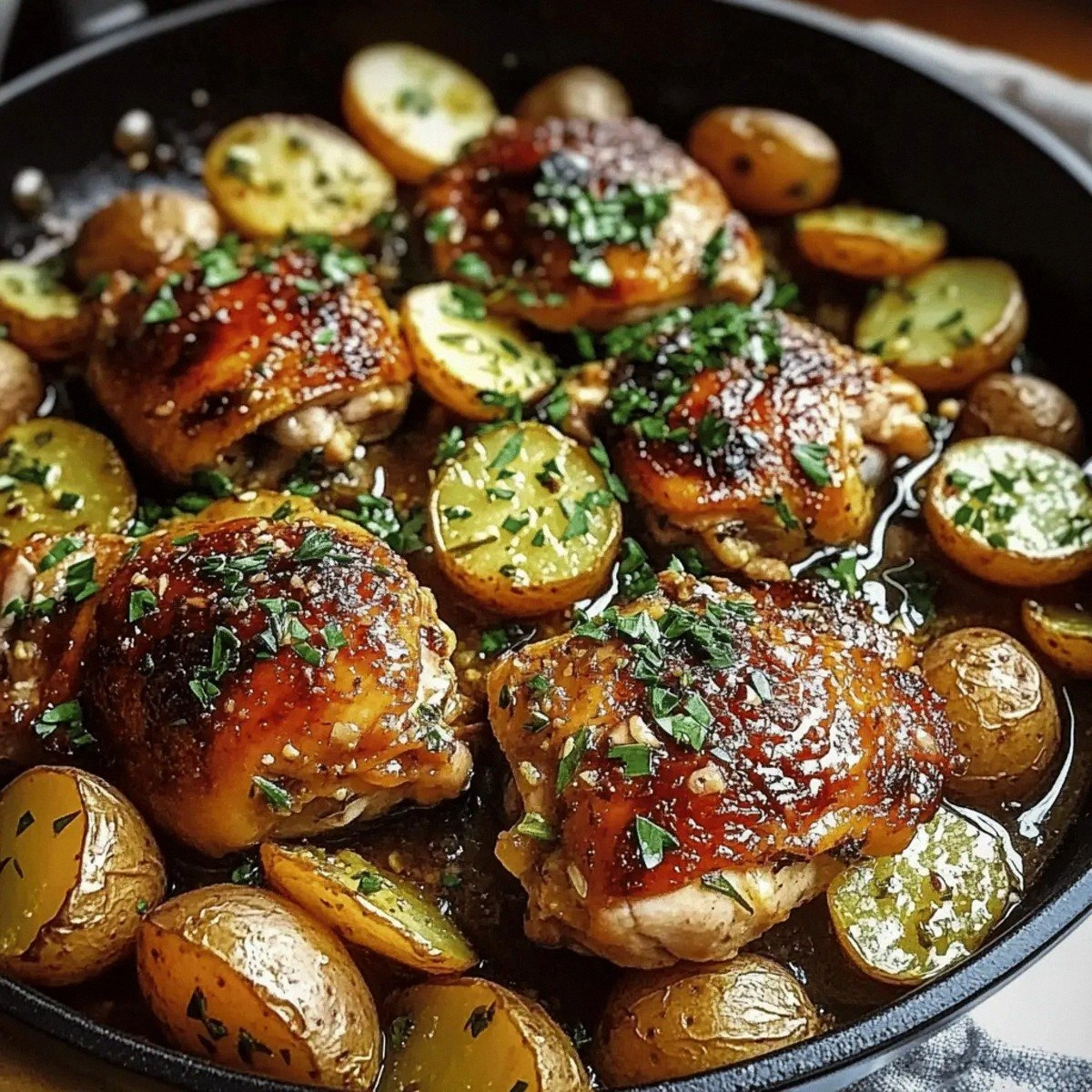
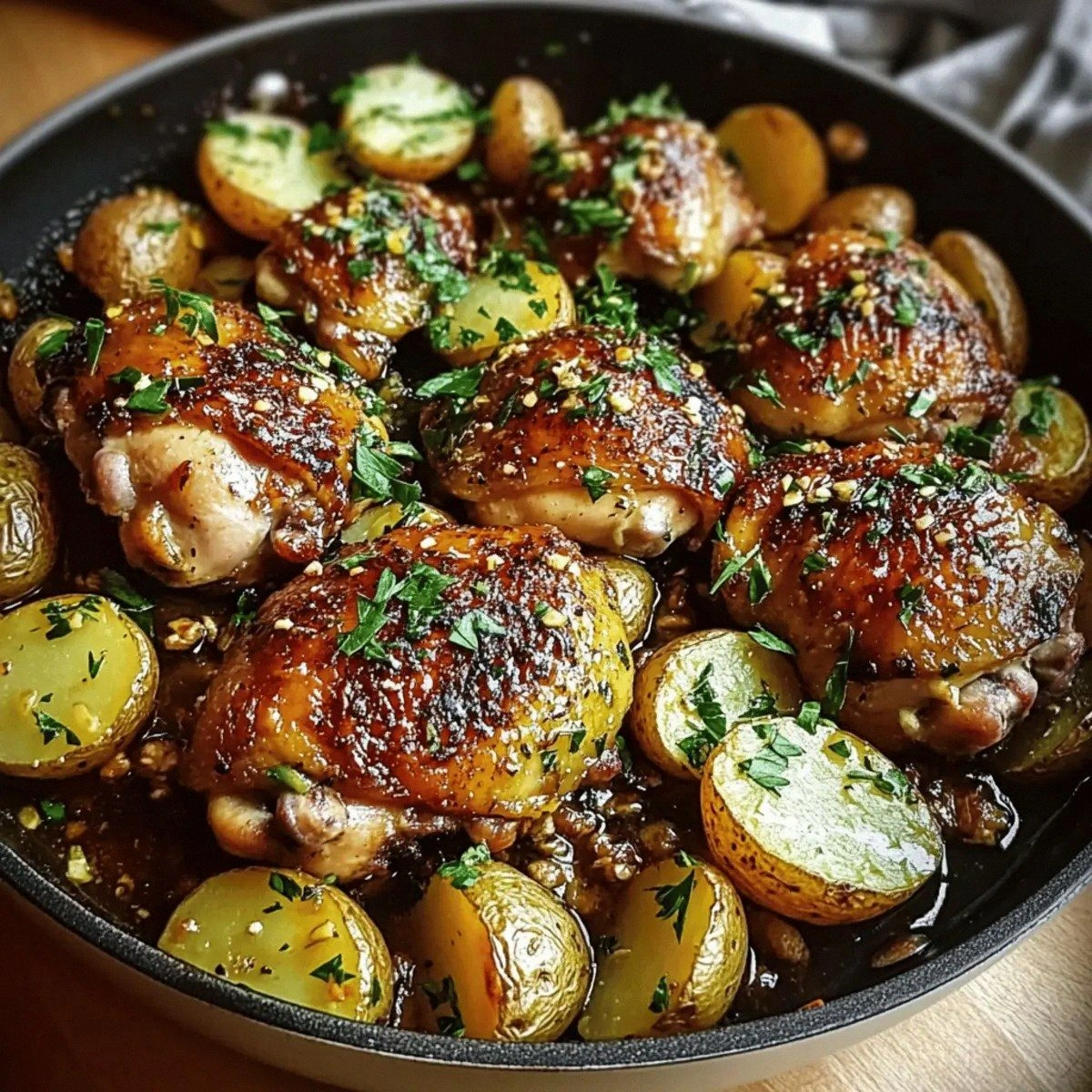
Picture this: golden chicken thighs that crackle when you bite them, revealing meat so juicy it practically sighs. Baby potatoes that have absorbed every last drop of garlicky, herby, lemony butter, their edges caramelized into crispy, salty shards. The sauce — oh, the sauce — it coats everything like liquid sunshine, pooling in the crevices of the potatoes, clinging to the chicken, begging to be sopped up with crusty bread until you're practically licking the skillet. And the smell? It drifts through the house like a promise, drawing everyone to the kitchen with the gravitational pull of a small planet. My roommate walked in, took one whiff, and announced, "I'm canceling my dinner plans. Whatever this is, I need it in my face immediately."
Here's the kicker: most skillet chicken recipes treat the potatoes like an afterthought, tossing them in raw and hoping for the best. That's why you end up with either rubbery spuds or dry bird. This version flips the script with a two-stage sear that builds layers of flavor like you're constructing the world's most delicious lasagna. First the chicken, then the potatoes, then the butter-garlic bath that marries them into something greater than the sum of their parts. The technique is stupid-simple, but the result tastes like you trained in a French country kitchen. I dare you to taste this and not go back for seconds. Actually, I dare you to taste this and not hide the leftovers in the back of the fridge so you don't have to share.
Let me walk you through every single step — by the end, you'll wonder how you ever made it any other way.
What Makes This Version Stand Out
- Crispy-Soft Paradox: The chicken develops a shatter-crisp skin while the inside stays spoon-tender, and the potatoes achieve the same miracle — fluffy centers with edges that crunch like kettle chips.
- One-Pan Laziness: Everything cooks in a single skillet, including the sauce. Fewer dishes means more time for important things, like eating straight from the pan while standing over the stove.
- Butter Emulsion Magic: Instead of just melting butter at the end, we create a glossy emulsion that clings to every surface, turning humble ingredients into velvet-coated luxury.
- Herb Timing Trick: Dried herbs go in early to bloom in fat, fresh herbs finish at the end for brightness. It's the difference between "meh" and "did a professional chef sneak into my kitchen?"
- Lemon Zest Reveal: A whisper of zest added off-heat keeps the citrus oils volatile, so every bite pops with sunshine instead of tasting like furniture polish.
- Make-Ahead Friendly: Prep everything up to the final sear earlier in the day. When hunger strikes, you're 15 minutes away from bliss.
- Roommate Tested: Three different households have devoured this. Zero leftovers survived past midnight. One person threatened to lick the skillet. I call that success.
Alright, let's break down exactly what goes into this masterpiece...
Inside the Ingredient List
The Flavor Base
Chicken thighs are the unsung heroes of weeknight dinners. They forgive overcooking, stay juicy under a hard sear, and cost half what those prima-donna chicken breasts charge. I specify boneless, skin-on thighs because the skin renders into crispy gold that crackles like a fireplace, while the boneless factor means you can shovel forkfuls into your mouth without performing surgery at the table. If you absolutely must use breasts, I won't judge (okay, I'll judge a little), but cut them into thick chunks so they don't dry out like a desert creek. The real secret is letting them sit uncovered in the fridge for an hour before cooking — the dry air dehydrates the surface so you get a crust that would make a French chef weep.
The Texture Crew
Baby potatoes are tiny flavor sponges, their thin skins wrinkling into salty, buttery jackets that burst with herb-flecked steam. I grab the mixed bags — red, yellow, purple — because eating a rainbow makes me feel like a responsible adult even when I'm essentially consuming half a stick of butter. Cut the larger ones in half so everything cooks evenly; nothing's sadder than a potato that's charred outside and crunchy inside. If baby potatoes are highway robbery in your store, grab Yukon Golds and cube them into one-inch chunks. They'll still cradle that sauce like edible shot glasses, just with more surface area for crisping.
The Unexpected Star
Garlic gets all the glory, but it's how we treat it that matters. Smash the cloves with the flat of your knife — this releases the oils without turning it into bitter paste. We're using six cloves because this is not the time for subtlety. The butter mellows the harsh edges, transforming raw aggression into sweet, nutty complexity. If you're a vampire or dating someone who is, you could dial it back, but honestly, just make sure everyone at the table eats some. That way you're all equally fragrant and nobody can complain.
The Final Flourish
Fresh parsley isn't just green confetti. It brings a grassy snap that cuts through richness like a machete through jungle undergrowth. Chop it just before serving so the essential oils stay volatile. The lemon does something similar — a quick grate of zest right before serving perfumes the whole dish with sunshine. Skip either one and the skillet becomes a one-note symphony, delicious but forgettable. Together they create that restaurant-quality lift that makes people close their eyes involuntarily when they taste it.
Everything's prepped? Good. Let's get into the real action...
The Method — Step by Step
-
Pat those chicken thighs drier than a stand-up comedian's wit. Moisture is the enemy of browning, and we want crust so deep it could star in a crime drama. Season aggressively with salt, pepper, thyme, and rosemary — the dried herbs need fat and heat to wake up and sing. Let them sit while you prep the potatoes; this brief brine helps the seasoning penetrate beyond the surface. Heat a 12-inch skillet over medium-high until a drop of water skitters across like it's late for a meeting. Add the olive oil and swirl to coat — it should shimmer like a mirage but not smoke.
-
Lay the chicken skin-side down and do not move it for six whole minutes. I know, I know, you want to peek. Resist. This is where the Maillard reaction works its dark magic, turning proteins into hundreds of flavor compounds. The kitchen will start smelling like Thanksgiving and a campfire had a delicious baby. When the edges turn amber and the skin releases easily from the pan, flip and cook another four minutes. Transfer to a plate — they'll finish later, so don't worry if they're still a little blush inside.
-
Now the potatoes get their moment. Toss them with the remaining oil, salt, and pepper right in the same pan, scraping up those gorgeous browned bits. They should sizzle enthusiastically when they hit the metal. Arrange them cut-side down for maximum caramelization real estate. Let them sear undisturbed for five minutes — this is when they develop that potato-chip crust that makes people fight over the last one. Give them a flip and another five, then scoot them to the edges to make room for the butter bath.
-
Reduce heat to medium and add the butter. As it foams, toss in the smashed garlic cloves. Stir constantly for 90 seconds — the butter will go from pale to hazelnut brown, and the garlic will turn golden without burning. This is the moment of truth. The smell will hit you like a warm hug from someone who really means it. Swirl the pan so the butter washes over the potatoes, basting them in nutty, garlicky liquid gold.
-
Nestle the chicken back among the potatoes, skin-side up so it stays crispy. Squeeze half the lemon over everything, catching seeds in your other hand like a pro. Cover and let everything simmer together for eight minutes — just enough time for the flavors to marry without the chicken turning stringy. The potatoes should be tender when pierced with a knife, the sauce thick enough to coat a spoon. If it's too thin, crank the heat for a final 60-second blast.
-
Off heat, shower with parsley and grate the remaining lemon zest directly over the skillet. The heat will bloom the citrus oils, sending a perfume cloud that makes everyone within sniffing distance suddenly appear in your kitchen. Give it a gentle stir — just enough to distribute the green confetti without smashing the potatoes. Serve straight from the pan because dishes are for people with time machines. If you managed not to eat half the crispy chicken skin while "tasting," you have stronger willpower than I do.
That's it — you did it. But hold on, I've got a few more tricks that'll take this to another level...
Insider Tricks for Flawless Results
The Temperature Rule Nobody Follows
Most home cooks are either timid or reckless with heat. Medium-high means the oil should ripple but not smoke — if it's shrieking, the exterior burns before the interior cooks. After browning, back the heat down to medium for the butter stage. Too hot and the milk solids scorch, tasting like burnt popcorn. Too low and you miss the nutty depth that makes people ask what restaurant you ordered from. I hover my hand two inches above the pan; if I can hold it there for four seconds, the temp is perfect. A friend tried skipping this step once — let's just say her smoke alarm now doubles as a dinner bell.
Why Your Nose Knows Best
Ignore the clock and trust your senses. When the garlic smells sweet instead of sharp, when the butter smells like toasted hazelnuts, when the potatoes smell like earthy popcorn — those are your cues. Olfactory memory is more accurate than any timer. I set a backup alarm, but I always pull the pan when the aroma hits that nostalgic, "grandma's kitchen on Sunday" note. Future pacing: picture yourself pulling this out of the oven, the whole kitchen smelling incredible, and knowing you nailed it because your nose told you so.
The 5-Minute Rest That Changes Everything
After the final simmer, let the skillet sit off heat for five minutes. The sauce thickens slightly as the butter cools, clinging better to every surface. The chicken juices redistribute so they don't flood the plate when cut. The potatoes absorb the last whisper of garlic so each bite tastes complete. Cover with a lid or even a sheet pan — anything to trap the steam. This is when you pour yourself a glass of wine, set the table, and pretend you planned this elegant pause all along.
Creative Twists and Variations
This recipe is a playground. Here are some of my favorite ways to switch things up:
Smoky Paprika Paradise
Swap the thyme for smoked paprika and add a pinch of cayenne. The potatoes turn crimson and taste like Spanish chorizo without the meat. Finish with a splash of sherry vinegar instead of lemon — it gives a tangy backbone that makes you want to dance flamenco around the kitchen.
Creamy Mustard Dream
Stir one tablespoon of whole-grain mustard into the butter after browning. The seeds pop between your teeth, releasing tiny bursts of heat. Add a splash of cream at the very end for a glossy, gravy-like sauce that begs for crusty bread. This version converted my mustard-hating nephew into a believer.
Mediterranean Escape
Trade rosemary for oregano, add a handful of halved cherry tomatoes with the garlic, and finish with crumbled feta. The tomatoes burst into sweet pockets that contrast with salty cheese. Serve over a bed of baby spinach so the heat wilts the leaves into silky ribbons.
Asian Fusion Flip
Replace dried herbs with a teaspoon of Chinese five-spice, swap olive oil for sesame, and finish with scallions and a drizzle of soy sauce. The butter still emulsifies, but now it tastes like roasted duck at a night market. My roommate ate this version cold at 2 a.m. straight from the fridge — no reheating needed.
Green Goddess Glow
Blitz together parsley, basil, tarragon, and a spoonful of mayo. Dollop on top right before serving so the herbs stay neon bright. The mayo melts into the sauce, adding body without heaviness. Tastes like springtime even in the dead of winter.
Storing and Bringing It Back to Life
Fridge Storage
Pack leftovers in a shallow glass container so they cool quickly and the sauce doesn't turn into a butter brick. It keeps four days, though I've never witnessed such restraint. Press plastic wrap directly against the surface to prevent that weird skin that tastes like regret. Reheat gently in a covered skillet with a splash of water — the steam revives the potatoes without turning them to mush.
Freezer Friendly
Freeze individual portions in zip-top bags, flattened so they thaw in minutes under warm water. The texture won't win beauty contests, but the flavors deepen, becoming almost confit-like. Thaw overnight in the fridge, then reheat in a skillet with a fresh pat of butter to bring back the gloss. Pro tip: label the bag or you'll play freezer roulette in three months.
Best Reheating Method
Skip the microwave unless you enjoy rubber chicken. Instead, add a tablespoon of water to a skillet, pile in the leftovers, and cover. Steam for three minutes over medium-low heat, then remove the lid and crank the heat for a final sear. The skin crisps back up, the sauce re-emulsifies, and your kitchen smells like you just cooked from scratch. Future you will high-five present you.