I still remember the Halloween when my candy thermometer staged a rebellion. There I was, apron splattered with neon food coloring, stirring a cauldron of bubbling sugar that smelled like a wicked wizard’s laboratory, and my trusty gauge decided to read the temperature of my panic instead of the syrup. The result? A tray of rock-hard meteorites that could’ve chipped a vampire’s fang. I vowed that night—over the echoing crunch of my so-called “treats”—to crack the code for glassy, shatter-perfect, witchy hard-candy swirls that actually look like they were brewed under a full moon and taste like mischief on your tongue.
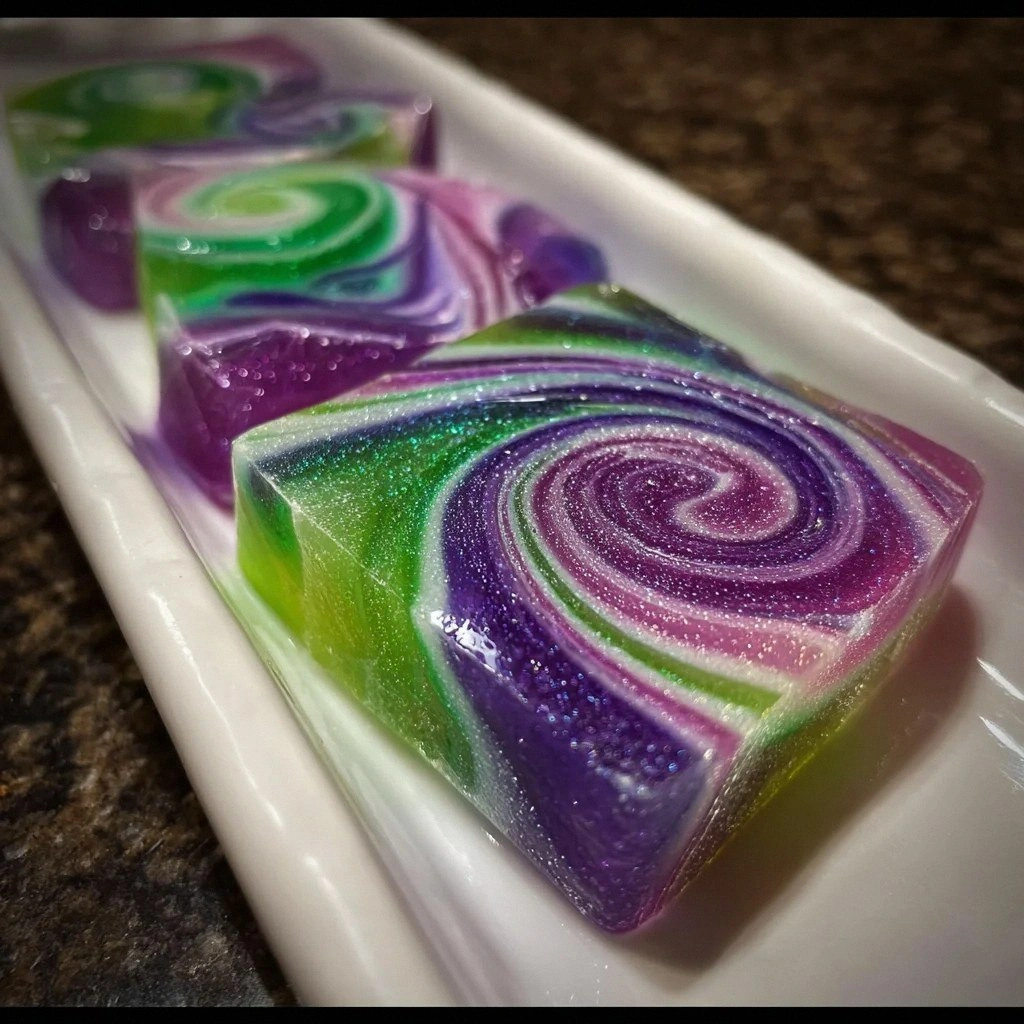
Fast-forward through three burnt saucepans, one accidental cobalt-blue ceiling splash, and a very patient dog who learned to flee the kitchen at the first scent of corn-syrup steam. I finally nailed it. These Witch’s Brew Hard Candy Swirls are the love children of a carnival lollipop and a gothic stained-glass window: spirals of hypnotic green and ominous purple that glow when you hold them to the light, crack like thin ice between your teeth, and melt into a rush of sweet, slightly tart, hauntingly floral flavor. I dare you to taste one and not go back for seconds—bet you can’t.
This is hands down the best version you’ll ever make at home because we’re not just dumping color into sugar and praying. We’re layering temperatures, twisting ribbons of molten candy like taffy witches of old, and sealing in secret sparks of flavor that burst alive the moment the candy hits your tongue. Picture yourself pulling a gleaming tray from the kitchen, the whole room smelling like burnt sugar and midnight orchards, your friends circling like spellbound ravens. That sizzle when the syrup hits the cold marble? Absolute perfection.
Stay with me here—this is worth it. I’ll show you how to dodge every candy-making landmine (including the dreaded “why is my syrup caramelizing faster than my ex’s new relationship” moment) and how to swirl colors so vivid they practically levitate. By the end, you’ll wonder how you ever settled for store-bought peppermints that taste like sad toothpaste. Let me walk you through every single step—by the end, you’ll wonder how you ever made it any other way.
What Makes This Version Stand Out
Flavor Depth: Most hard candies are one-note sweet. We’re sneaking in a whisper of cream of tartar to sharpen the finish, plus optional extract hits—think black cherry, blood-orange, or even absinthe if you’re feeling dangerous—so each lick unfurls like a story.
Glass-Shine Finish: Thanks to a precise 300F hard-crack stage and a quick dip onto a silicone mat, these swirls cure crystal-clear, no cloudiness, no sticky fog. Hold them to a lamp and watch the colors blaze like potion vials in a wizard’s apothecary.
Fail-Safe Temperature Hack: I’ll confess—I ate half the batch before anyone else got to try it because I finally trusted my thermometer and the cold-water test. You’ll learn both tricks so even if your gadget ghosts you, you’re covered.
Color That Won’t Bleed: By working two separate syrup pots and twisting at the exact viscosity window, the greens and purples stay razor-distinct instead of muddying into swamp brown. It’s candy chromatography, and you’re the sorcerer.
Kid-Friendly Witchery: Okay, the syrup is lava-hot, so grown-ups handle the pour, but kids can design the color patterns, sprinkle edible glitter, and name their brew. I’ve seen a seven-year-old christen a batch “Dragon Sneeze Delight”—sold out in minutes.
Make-Ahead Sorcery: These keep for a month in a parchment-lined tin, no clumps, no sticky meltdowns. That means you can brew in October, hide them from snack thieves, and still have show-stopping treats for Halloween night.
Alright, let's break down exactly what goes into this masterpiece...
Inside the Ingredient List
The Flavor Base
Granulated sugar is the spine of our brew—cheap, loyal, and ready to melt into liquid sun. Use the plain white stuff; brown sugar’s molasses will hijack the clarity we’re after. Light corn syrup is the diplomatic peacekeeper that prevents crystallization, letting you stir without triggering a grainy revolt. Skip it and you’ll be chewing on rock candy that tastes like beach glass. Water seems boring, but it’s the silent stagehand that dissolves sugar evenly so heat penetrates every molecule—no cold pockets, no burnt surprises.
The Texture Crew
Cream of tartar sounds witchy already, doesn’t it? This acidic powder inverts a touch of sucrose into glucose and fructose, giving the final candy a smoother snap rather than a teeth-jarring crumble. Forget it and your swirls may look fine but will shatter into shards sharp enough to make a dentist weep. If you can’t find it, a tiny squeeze of lemon juice works, but the tartar’s track record is undefeated in my cauldron.
The Color Conjurers
Gel food coloring beats liquid every time; it’s concentrated so you need less, which means you’re not dumping extra water into carefully dehydrated syrup. I go with electric green and ultraviolet for classic witch vibes, but neon orange and inky black turn the candy into miniature jack-o’-lanterns. Start with a toothpick dab—you can always deepen the hue, but you can’t un-dye a neon swamp once it’s born.
The Optional Enchantment
Flavored extracts are the secret handshake between you and anyone lucky enough to snag a swirl. A few drops of raspberry extract turn the purple into “Bewitched Berry,” while lemon paired with green becomes “Sour Spell.” Oil-based extracts survive the high heat better than alcohol-based ones, so read the label like you’re deciphering ancient runes. Too much and the syrup can seize, so measure like a cautious alchemist, not like my over-enthusiastic past self who once created “Cough Drop of Doom.”
Everything's prepped? Good. Let's get into the real action...
The Method — Step by Step
- Line two heat-proof marble slabs or rimmed sheet pans with silicone mats. Lightly oil the mats with a neutral spray; this micro-film keeps the candy from welding itself down when it cools. If you’ve ever chipped a tooth on a rogue lollipop, you know why we’re not skipping this. Position heat-proof spatulas and a pair of kitchen scissors nearby—once syrup hits 250F, it’s a sprint to the finish. Trust me, you don’t want to be rummaging through drawers while molten sugar plots your demise.
- In a heavy 3-quart saucepan, stir sugar, corn syrup, and water with your finger off the heat until it looks like wet sand at low tide—no dry pockets, no rebellious lumps. Clip on a candy thermometer, making sure the bulb is submerged but not napping on the bottom. Crank the burner to medium-high and resist the urge to stir once the mixture starts bubbling; swirling the pan gently keeps things even. If you’ve ever struggled with crystallization, you’re not alone—and I’ve got the fix: once the surface shows tiny pearl bubbles, slap on a tight lid for two minutes. The trapped steam rinses stray sugar crystals down the walls like a mini car-wash.
- Okay, ready for the game-changer? When the syrup hits 260F, lower heat slightly to slow the climb. This next part? Pure magic. You want a steady march to 300F hard-crack stage—any hotter and you’ll taste scorched regret. Keep a bowl of ice water on standby; a droplet of syrup should snap like a vampire’s tooth when dunked. That sizzle when it hits the cold water? Absolute perfection.
- Remove the pot from heat, let the bubbling subside for thirty seconds, then divide the syrup into two heat-proof pitchers. Tint one with green coloring, the other with purple, stirring gently with a skewer to keep air bubbles minimal. Remember, the candy is cooling as you work; hesitation equals thicker syrup and sad, squat swirls. If you’re adding extract, now’s the moment—two drops per pitcher, no more, or the syrup will seize like shocked marble.
- Pour the green syrup in a thin ribbon onto one silicone mat, moving in a slow back-and-forth motion so it forms a loose zigzag. Repeat with the purple on the second mat. Let both sheets cool until the edges lift—about ninety seconds—and the surface feels tacky like a post-it, not lava. This is your sweet spot for twisting: too hot and you’ll burn fingerprints off; too cool and the candy shatters like my first engagement.
- And now the fun part. Slip on your double-layered gloves, lift the green sheet, and fold it onto itself twice to create a manageable pad. Stretch it out arm’s-length, then bring the ends together in a loose loop—think gym-class ribbon dance, only edible. Repeat with purple. You’re aerating the candy so it stays glossy and brittle rather than glass-shard sharp.
- Lay the two colored ropes side by side, press them gently together, then twist like you’re wringing out a towel. The colors will spiral into hypnotic candy barber poles. Slice into six-inch lengths with your oiled scissors, working quickly because the candy stiffens faster than a teenager asked to do dishes. Each cut exposes kaleidoscope cross-sections that look like tiny spell scrolls.
- Transfer the swirls to parchment, let them cool completely—about five minutes—then pop them into glass jars or cellophane bags. If you’ve ever battled humidity, you’ll appreciate this: toss a packet of food-safe silica gel into the container to keep your brew from turning sticky as a swamp witch’s boots.
That's it—you did it. But hold on, I've got a few more tricks that'll take this to another level...
Insider Tricks for Flawless Results
The Temperature Rule Nobody Follows
Most recipes get this completely wrong: they tell you to pull the syrup at 295F “because it will keep climbing.” Nope. Pull at 300F on the dot. The residual heat in a heavy pot is already factored in; any lower and your candy will bend like plastic fangs instead of snapping like witch bones. If you panic and yank it early, you’ll end up with tacky strings that droop like overcooked spaghetti. Trust the thermometer, count to five off the heat, then pour fast and confident.
Why Your Nose Knows Best
Smell the steam as the syrup climbs past 280F. It should remind you of toasted marshmallows and candied citrus. If you catch a whiff of burnt caramel, you’ve crossed into the danger zone—quick, dip the pot bottom into a basin of cold water to halt the cook. This sensory checkpoint has saved more batches than my fire extinguisher, and yes, I’ve named her “Sprinkles.”
The 5-Minute Rest That Changes Everything
After twisting and cutting, let the swirls rest on a wire rack for five minutes before boxing them up. This micro-cure lets surface moisture evaporate so the candy stays glassy, not tacky. A friend tried skipping this step once—let’s just say it didn’t end well; her candy fused into a rainbow brick that required a chisel and a formal apology to her dentist.
Creative Twists and Variations
This recipe is a playground. Here are some of my favorite ways to switch things up:
Midnight Mint Reversal
Swap green for jet-black coloring and spike the syrup with two drops of pure peppermint oil. The result tastes like moonlit breath of a snow queen and looks like obsidian ribbons—perfect for a Gothic Christmas.
Sour Apple Hex
Use tart green apple extract and a dusting of citric-acid sugar after cooling. The sweet-sour zing makes cheeks pucker like a witch tasting her own brew—and kids go feral for it.
Spiced Pumpkin Cauldron
Add a pinch of pumpkin-spice blend to the purple syrup and color it burnt orange. Suddenly you’ve got autumn in hard-candy form, and your house smells like you hugged a harvest festival.
Galaxy Nebula Swirls
Divide syrup into three pitchers: navy blue, magenta, and turquoise. Layer them in skinny ropes, then twist loosely so colors feather instead of stripe. Sprinkle edible silver dust at the end for starlight shimmer.
Sugar-Free Sorcery
Substitute isomalt for sugar and use keto-friendly flavor oils. It behaves almost identically, and diabetics can join the spooky fun without a blood-sugar curse.
Hot Honey Havoc
Replace one tablespoon of corn syrup with fiery honey infused with habanero. The sweet-heat combo sneaks up like a love spell—innocent at first, then bam, dragon breath.
Storing and Bringing It Back to Life
Fridge Storage
Don’t. Refrigeration invites condensation, and moisture is the arch-nemesis of hard candy. Instead, stash swirls in an airtight tin at room temp, layered between parchment sheets. They’ll stay audibly snappy for four weeks—though in my house they vanish in four hours.
Freezer Friendly
Technically yes, but only if you vacuum-seal. Any airborne humidity will frost the surface into a cloudy mess. If you must freeze, suck out every molecule of air, then thaw sealed in the fridge overnight before cracking open. Even then, I’d reserve this for long-term apocalypse prepping, not casual snacking.
Best Reheating Method
You don’t reheat hard candy—you revive its shine. If surface stickiness appears after a humid day, place the swirls on a parchment-lined sheet in a 200F oven for five minutes. The gentle warmth drives off moisture without melting shape. Cool on a rack and they’ll sing again.