I was standing in my kitchen, staring at a half‑finished batch of classic Philly cheesesteak that had somehow turned into a soggy, sad mess. My roommate dared me to “make it into soup” and I laughed, thinking, “Sure, why not? I’ve got a pot, some cheese, and a lot of pride to protect.” The next thing I knew, the whole apartment was filled with the sizzling sound of steak hitting a hot pan, the sweet perfume of caramelizing onions, and the faint, buttery whisper of garlic powder flirting with the air. I was nervous, excited, and a little terrified that I’d end up with a watery disaster—yet the moment the first spoonful hit my tongue, I realized I had stumbled onto something truly magical.
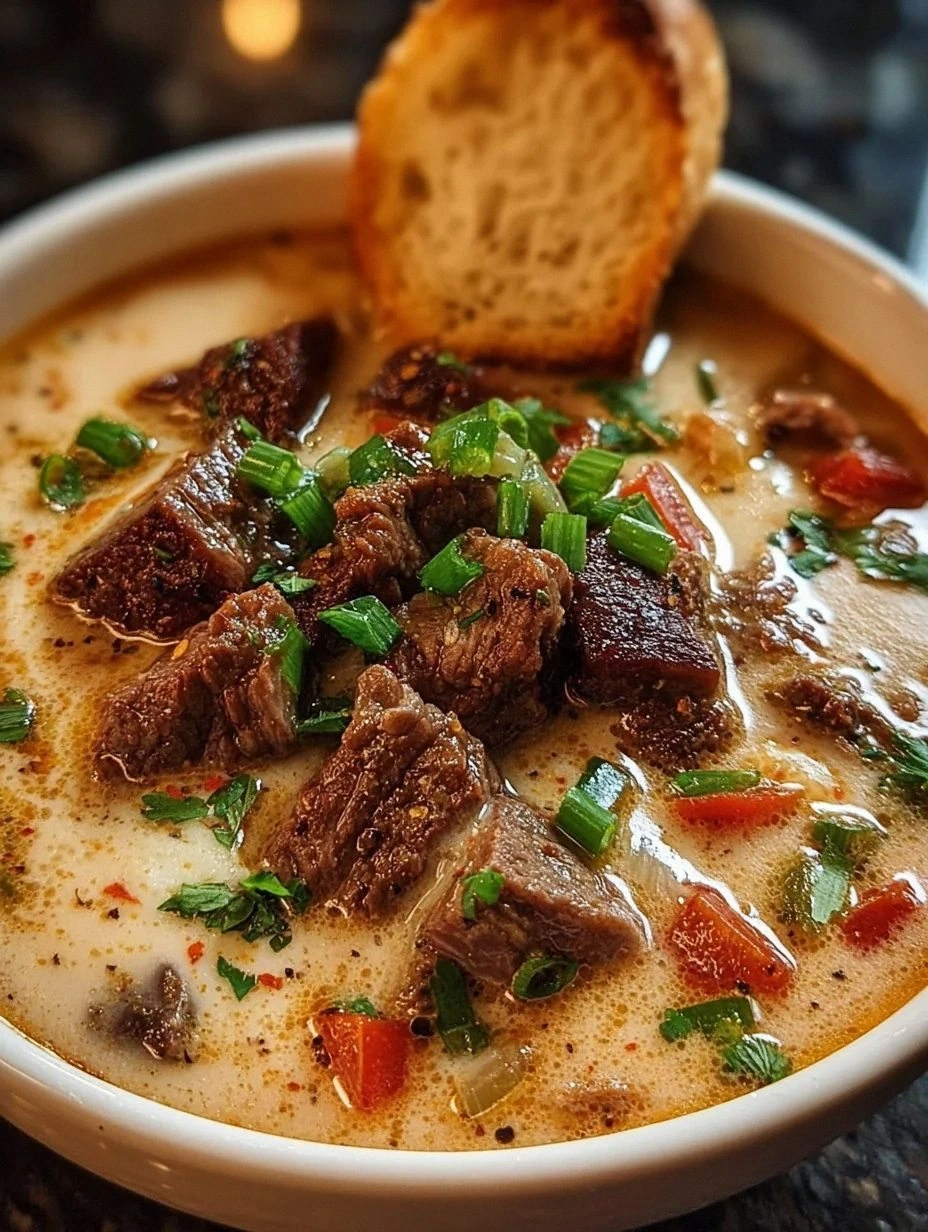
Picture this: a steaming bowl of soup that hugs you like a warm blanket, the richness of melted provolone and mozzarella swirling with a velvety cream cheese base, and tender ribbons of sirloin steak that still have that signature Philly snap. The broth is deep, beefy, and just a touch tangy from Worcestershire sauce, while the diced tomatoes add a bright acidity that cuts through the decadence. You hear the gentle bubbling as the soup simmers, see the golden flecks of melted cheese, and feel the comforting weight of the bowl in your hands. Every bite is a nostalgic trip to the streets of South Philly, but with a luxurious, creamy twist that makes you want to slurp until the last drop disappears.
Most recipes for “cheesesteak soup” either drown the steak in a bland broth or overload the dish with cheese until it feels like a dairy overdose. I’ve tried a dozen of them, and each time I ended up with either a soupy mess or a clumpy, greasy pot. That’s why I went back to basics, respecting the core flavors while adding a few game‑changing tricks that elevate the texture and depth. I’m talking about a butter‑flour roux that creates a silk‑smooth body, a splash of milk that brightens the flavor, and a strategic sprinkle of dried thyme that adds a whisper of earthiness you didn’t know you were missing.
And here’s the kicker: I’m about to reveal the secret ingredient that most home cooks overlook—a drizzle of olive oil right at the start, which not only prevents the veggies from sticking but also carries the aromatics into every corner of the pot. I dare you to taste this and not go back for seconds. Let me walk you through every single step — by the end, you’ll wonder how you ever made it any other way.
What Makes This Version Stand Out
- Flavor Explosion: The combination of Worcestershire sauce, thyme, and a dash of red pepper flakes creates a layered taste that’s both bold and comforting, making each spoonful an adventure.
- Creamy Texture: A butter‑flour roux followed by milk and cream cheese gives the soup a luxurious mouthfeel that coats the palate like velvet.
- Steak Integrity: Thinly sliced sirloin is sautéed just until it’s browned, preserving its tenderness and that iconic Philly chew.
- Cheese Symphony: Provolone, mozzarella, and extra shredded cheese melt together, delivering that signature cheesesteak stretch without turning the broth clumpy.
- Simple Prep: All ingredients are pantry‑friendly and the steps are straightforward, meaning you can throw this together on a weeknight without a PhD in culinary arts.
- Make‑Ahead Friendly: The soup stores beautifully; reheat and add a splash of milk for instant revival, perfect for busy families.
- Crowd‑Pleaser: Whether you’re feeding a group of hungry teenagers or a sophisticated dinner party, this soup earns rave reviews and empty bowls.
- Seasonal Flexibility: The recipe shines in chilly winter evenings but is just as delightful in a warm summer night when you crave comfort without the heaviness.
Inside the Ingredient List
The Flavor Base
Olive oil is the silent hero, a drizzle of goodness that carries the aromatics and adds a subtle fruitiness to the broth. If you skip it, the onions and peppers will stick, and you’ll lose that foundational depth. For a richer flavor, swap half the olive oil for a splash of butter, but keep the oil for its higher smoke point.
Onion, chopped finely, provides a sweet, fragrant foundation. It caramelizes just enough to bring a gentle sweetness that balances the acidity of the diced tomatoes. Missing the onion means a flat broth; you can replace it with shallots for a milder profile, but the classic Philly taste relies on the onion’s robustness.
Green and red bell peppers add color, crunch, and a subtle earthiness. Their natural sugars caramelize quickly, contributing a bright contrast to the rich cheese. If you’re out of fresh peppers, frozen diced peppers work, but fresh is always best for texture.
The Texture Crew
Sirloin steak is the star—thinly sliced, it cooks in seconds, retaining that iconic chew. Choose a well‑marbled cut for extra flavor; a lean steak can become dry. If you can’t find sirloin, ribeye or top round work, just slice as thin as possible.
Beef broth is the soul of the soup, delivering a deep, savory backbone. Homemade broth is ideal, but a high‑quality low‑sodium store‑bought version does the trick. Skipping the broth for water will dilute the flavor dramatically.
Diced tomatoes add a bright acidity that cuts through the richness. Their juices also contribute a subtle sweetness. For a less acidic version, use fire‑roasted tomatoes, which add a smoky nuance.
The Unexpected Star
Worcestershire sauce is the secret weapon, a tangy, umami‑packed condiment that lifts the entire dish. A little goes a long way; too much can overpower the delicate cheese balance. If you’re avoiding anchovies, a splash of soy sauce can mimic the depth.
Dried thyme brings an earthy warmth that ties the beef and cheese together. It’s easy to forget, but its aroma is unmistakable. Fresh thyme can be used in a 1:1 swap, just add it at the end to preserve its bright flavor.
Red pepper flakes are optional but add a subtle kick that wakes up the palate. If you’re sensitive to heat, start with a pinch and adjust to taste. For a smoky heat, try a dash of chipotle powder.
The Final Flourish
Butter and all‑purpose flour form a roux that thickens the soup without lumps, giving it that luxurious, velvety body. Skipping the roux will leave you with a watery broth that can’t hold the cheese. Use a whisk to blend the flour into the melted butter for a smooth paste.
Milk adds richness and helps the roux achieve a smooth consistency. Whole milk is best for creaminess; you can use 2% if you’re watching calories, but expect a slightly thinner texture.
Cream cheese is the ultra‑creamy component that makes this soup feel indulgent. It melts into the broth, creating a silky finish that’s impossible to resist. If you’re lactose‑intolerant, a dairy‑free cream cheese alternative works, though the texture will be a tad lighter.
Provolone and mozzarella cheese provide that signature Philly cheesesteak stretch and melt. Their combination ensures both flavor (provolone) and meltability (mozzarella). For a sharper bite, add a sprinkle of sharp cheddar at the end.
Garlic and onion powder amplify the aromatic base without adding extra moisture, keeping the soup’s consistency perfect. They’re the silent sidekicks that ensure every spoonful is balanced.
Crusty rolls are the perfect dipping companion, soaking up the broth while retaining a satisfying crunch. Stale rolls work even better—they absorb more liquid without falling apart.
Chopped fresh parsley adds a bright, herbaceous finish that cuts through the richness and adds a pop of color. If parsley isn’t your thing, cilantro or chives can be used for a different twist.
Extra cheese on top is the final flourish—because more cheese is always better. It forms a golden crust when the soup is served hot, adding a delightful textural contrast.
Everything's prepped? Good. Let’s get into the real action…
The Method — Step by Step
Heat a large Dutch oven over medium‑high heat and add a generous drizzle of olive oil. When the oil shimmers, toss in the chopped onion, green pepper, and red pepper. Sauté for about 5 minutes, stirring occasionally, until the vegetables turn translucent and the edges start to caramelize. That sizzle when it hits the pan? Absolute perfection. Once the aromatics are golden, season lightly with garlic and onion powder.
Push the veggies to the sides of the pot and add a tablespoon of butter. When the butter foams, sprinkle in the flour, whisking constantly to form a smooth roux. Cook for 2‑3 minutes, watching the mixture turn a light golden hue—this is your flavor base thickening in real time.
Kitchen Hack: Use a whisk, not a spoon, to avoid lumps in the roux.Gradually pour in the beef broth while whisking, ensuring the roux dissolves completely. The pot should begin to bubble gently; this is where the soup gains its silky body. Add the diced tomatoes with their juice, Worcestershire sauce, dried thyme, and red pepper flakes. Stir everything together and let it come to a low simmer.
While the broth simmers, heat a separate skillet over high heat and add a splash of olive oil. Toss in the thinly sliced sirloin steak, spreading it out in a single layer. Do not crowd the pan. Cook for 1‑2 minutes, letting the edges brown and develop that coveted caramelized crust.
Watch Out: Overcooking the steak makes it tough; remove it as soon as it’s browned.Transfer the browned steak into the simmering broth, letting it mingle with the vegetables and aromatics. Reduce the heat to medium‑low and stir in the milk, followed by the cream cheese, cutting it into cubes for quick melting. The soup will turn a luscious, pale orange‑cream color—this is the moment of magic.
Now it’s cheese time. Sprinkle the shredded provolone and mozzarella into the pot, stirring gently until they melt into a cohesive, glossy mixture. If you notice any clumps, turn the heat down and keep whisking—patience is key. Finish with a handful of extra shredded cheese on top; it will create a delightful, slightly stringy layer as you serve.
Taste the soup and adjust seasoning with salt, pepper, and perhaps a splash more Worcestershire if you crave extra depth. Add the chopped fresh parsley for a burst of color and freshness that lifts the entire bowl. Let the soup rest for a couple of minutes off the heat; this allows the flavors to meld beautifully.
Serve the soup hot, ladling it into bowls with a side of crusty rolls ready for dunking. Garnish each bowl with a sprinkle of extra cheese and a pinch of parsley for that restaurant‑level finish. I’ll be honest — I ate half the batch before anyone else got to try it. And now the fun part: share, snap a photo, and watch your friends beg for the recipe.
That’s it — you did it. But hold on, I’ve got a few more tricks that’ll take this to another level…
Insider Tricks for Flawless Results
The Temperature Rule Nobody Follows
Never cook the roux on high heat. A moderate temperature lets the flour absorb the butter without scorching, resulting in a smooth, golden base. I once tried to rush it on high and ended up with a nutty, burnt flavor that ruined the entire soup. Keep the heat steady and watch the color change; patience pays off.
Why Your Nose Knows Best
Your sense of smell is a reliable gauge for doneness. When the steak hits the pan, listen for that rapid, high‑pitched sizzle—this means the meat is searing, not steaming. Similarly, the broth should emit a fragrant, slightly sweet aroma once the tomatoes and Worcestershire mingle. If you can’t smell the richness, the soup needs a few more minutes.
The 5‑Minute Rest That Changes Everything
After you finish cooking, remove the pot from heat and let it sit, covered, for five minutes. This rest period allows the cheese to fully integrate and the flavors to harmonize. Skipping this step can leave the soup tasting disjointed, as if the cheese and broth are still arguing.
Steak Slice Secrets
If you buy a whole sirloin, freeze it for 15‑20 minutes before slicing. The partial freeze makes the meat firmer, so you can slice it paper‑thin without tearing. Thin slices cook in seconds, preserving that tender chew. A friend once tried to slice warm meat and ended up with ragged pieces that turned rubbery.
Cheese Melt Mastery
Add the provolone first, then the mozzarella, and finish with extra shredded cheese just before serving. Provolone melts smoothly, mozzarella adds stretch, and the final cheese creates a glossy top layer. If you dump all the cheese at once, you risk clumping and uneven melt.
Roll Dipping Ritual
Toast the crusty rolls lightly before dunking. The toasted surface provides a crunchy contrast while still soaking up the soup. It prevents the roll from becoming soggy too quickly and adds a subtle caramel note that complements the broth.
Creative Twists and Variations
This recipe is a playground. Here are some of my favorite ways to switch things up:
Spicy Chipotle Kick
Swap the red pepper flakes for a teaspoon of chipotle powder and add a splash of adobo sauce. The smoky heat pairs beautifully with the cheese, turning the soup into a bold, southwestern delight.
Mushroom Medley
Add a cup of sliced cremini or shiitake mushrooms when you sauté the onions. The earthy mushrooms deepen the umami profile, making the soup even more comforting on a cold night.
Italian Flair
Replace the provolone with mozzarella and add a pinch of oregano and basil. Finish with a drizzle of pesto on top for a fresh, herbaceous twist that feels like a cross‑cultural love child.
Vegan Version
Use plant‑based steak strips, vegetable broth, dairy‑free cream cheese, and vegan mozzarella. The texture changes slightly, but the flavor remains rich and satisfying. A splash of nutritional yeast adds a cheesy depth.
Cheddar & Beer Fusion
Swap half the mozzarella for sharp cheddar and replace half the beef broth with a dark ale. The beer’s maltiness complements the cheddar, creating a hearty, pub‑style soup that’s perfect for game night.
Herb Garden Boost
Stir in fresh rosemary and sage during the final simmer for an aromatic lift. These herbs add a piney brightness that cuts through the richness and makes the soup feel spring‑fresh.
Storing and Bringing It Back to Life
Fridge Storage
Allow the soup to cool to room temperature, then transfer it to an airtight container. It keeps beautifully for up to 4 days in the refrigerator. When reheating, place the soup in a saucepan over medium heat, stirring occasionally, and add a splash of milk or broth to restore its silky texture.
Freezer Friendly
For longer storage, portion the soup into freezer‑safe bags or containers, leaving a little headspace for expansion. Freeze for up to 3 months. Thaw overnight in the fridge, then reheat gently on the stove, adding a splash of water or broth to revive the creaminess.
Best Reheating Method
The secret to perfect reheating is low and slow. Use a double‑boiler or a low‑heat saucepan, whisking constantly. A tiny splash of water or milk before you start will steam the soup back to its original velvety consistency without separating the cheese.