I was halfway through a frantic Tuesday night when my roommate dared me to create “something that could convince a meat‑lover to become a veggie‑fan.” I laughed, tossed a handful of broccoli into the pot, and reached for the chicken sausage that was about to expire. The kitchen smelled like a bustling Italian trattoria, the stovetop hissed like a chorus of tiny applause, and I could already see the steam swirling like ghostly ribbons above the pot. That moment of panic‑turned‑inspiration gave birth to what I now swear is the most addictive one‑pan dinner you’ll ever make. I’m not exaggerating when I say this dish is the culinary equivalent of a high‑five from your taste buds.
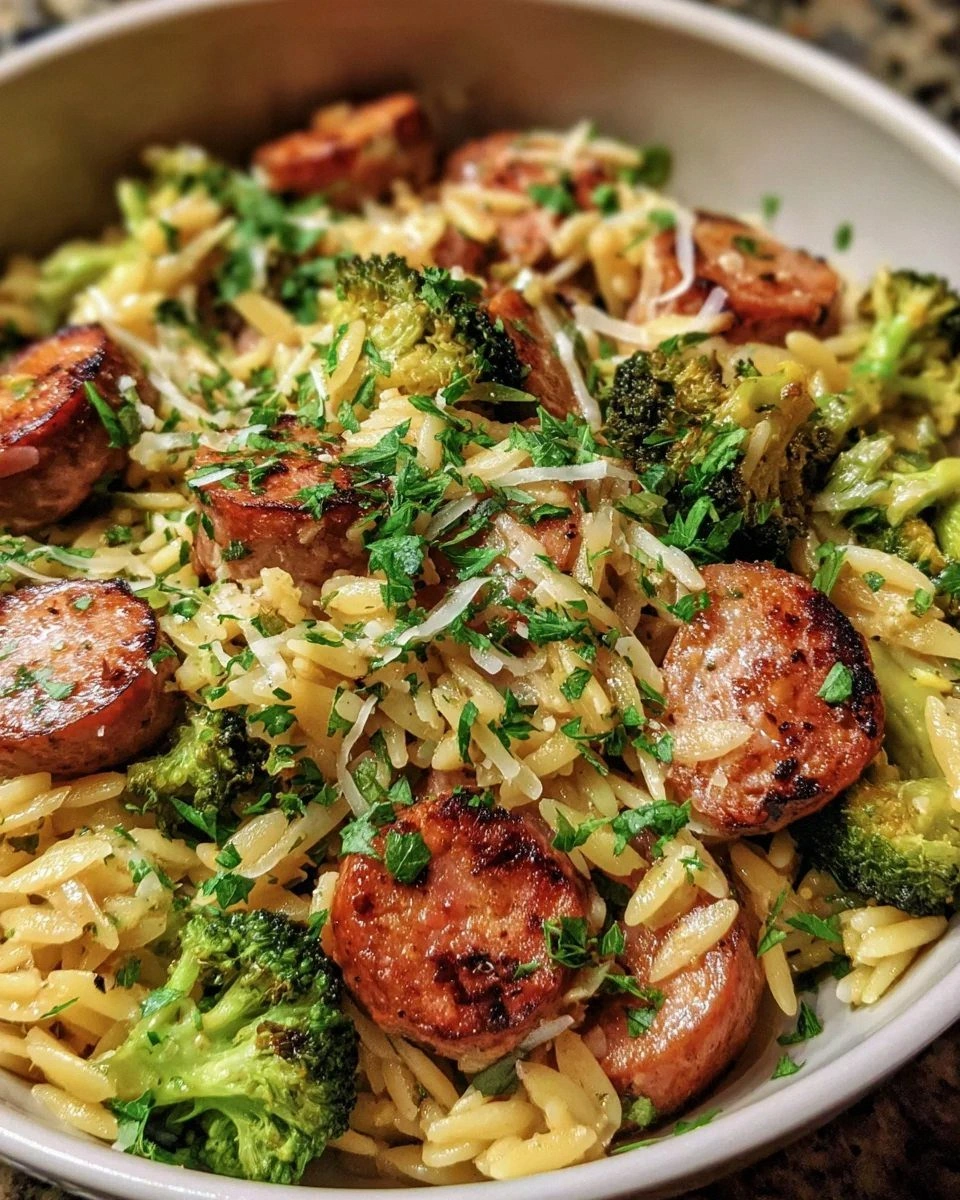
Imagine the first bite: the orzo is tender yet slightly al dente, cradling a buttery olive‑oil glaze that clings like velvet. The chicken sausage pieces are caramelized to perfection, their edges crisping just enough to crack under the fork, releasing a smoky, herb‑infused perfume that makes the whole kitchen feel like a Sunday market in Tuscany. The broccoli florets stay bright green, offering a satisfying crunch that contrasts beautifully with the creamy Parmesan melt that blankets everything like a warm, cheesy blanket. And the final sprinkle of fresh parsley? It’s the confetti at the end of a fireworks show—bright, fresh, and utterly unforgettable.
Most recipes for chicken sausage and broccoli try to hide the orzo behind a mountain of sauce or drown the veggies in a bland broth. Not this one. I’ve taken the time to balance each component so that the flavors don’t just coexist—they dance. The secret? A splash of chicken broth that deglazes the pan at just the right moment, allowing the orzo to absorb every ounce of savory goodness while the broccoli retains its vivid color and snap. And there’s a tiny twist you won’t find elsewhere: a pinch of Italian seasoning added at the very end, which lifts the whole dish into a sun‑kissed, herb‑laden nirvana.
Okay, ready for the game‑changer? I’m going to walk you through every single step—down to the exact moment you should hear the sizzle and the precise second you should add the parsley. By the end, you’ll wonder how you ever lived without this version, and I dare you to taste it and not go back for seconds. Let me walk you through every single step — by the end, you'll wonder how you ever made it any other way.
What Makes This Version Stand Out
- Flavor Explosion: The combination of chicken sausage, garlic, and Italian seasoning creates a flavor profile that’s bold yet balanced, like a perfectly tuned orchestra.
- Texture Harmony: Orzo’s subtle chew, broccoli’s crisp bite, and sausage’s caramelized crust provide a mouthfeel that’s simultaneously comforting and exciting.
- Simplicity: Only ten ingredients, all pantry‑friendly, and a single pan means you spend less time cleaning and more time eating.
- Unique Twist: Adding a splash of chicken broth at the deglazing stage lets the orzo soak up flavor without turning soggy—a trick most recipes miss.
- Crowd‑Pleaser: Even the pickiest eaters rave; the dish looks vibrant, smells intoxicating, and tastes like a restaurant‑quality entrée.
- Ingredient Quality: Using high‑quality chicken sausage and fresh broccoli makes a world of difference, turning humble staples into a gourmet experience.
- Cooking Method: The stovetop‑first, then simmer approach ensures every component is cooked to perfection without overcooking the delicate broccoli.
- Make‑Ahead Potential: This dish stores beautifully, and a quick reheat brings back that fresh‑out‑of‑the‑pan magic.
Inside the Ingredient List
The Flavor Base
Orzo Pasta is the silent hero here. Its rice‑shaped grains soak up the broth like a sponge, ensuring each bite is drenched in savory goodness. Skipping it would leave the dish feeling dry and under‑seasoned, turning a potential masterpiece into a bland side. If you can’t find orzo, try small shells or even rice, but expect a different texture.
Olive Oil does more than lubricate the pan; it carries the aromatics, giving the sausage a glossy finish and the veggies a gentle sheen. Choose extra‑virgin for a peppery bite, or go for a light, neutral oil if you prefer the sausage flavor to dominate. A common mistake is using too little oil, which leads to sticking and uneven browning.
Fun Fact: The word “orzo” actually means “barley” in Italian, even though the pasta is made from wheat. Its shape was originally designed to mimic the grain, making it a staple in ancient Italian soups.
The Texture Crew
Chicken Sausage brings lean protein and a juicy bite. Because it’s pre‑seasoned, you get a depth of flavor without the need for extra salt. If you’re watching calories, turkey sausage works just as well, though you may need to add a dash more Italian seasoning to compensate for the milder taste.
Broccoli Florets are the bright, crunchy counterpoint. Their natural sweetness is amplified when they’re quickly blanched before hitting the pan, preserving that vivid green color. Skipping the quick blanch can result in a mushy texture that defeats the purpose of having a vegetable that actually “crunches.”
The Unexpected Star
Garlic, freshly minced, is the aromatic glue that binds the dish together. Its pungent scent mellows as it cooks, turning sweet and buttery—exactly the flavor lift you need. If you’re sensitive, start with half a clove and build up; you’ll still get that unmistakable garlicky warmth.
Chicken Broth adds a savory depth that water simply can’t provide. Homemade broth is ideal because it carries the same chicken notes as the sausage, creating a seamless flavor loop. In a pinch, a low‑sodium store‑bought broth works fine, but avoid bouillon cubes—they can make the dish overly salty.
The Final Flourish
Italian Seasoning is the herbaceous finale, delivering basil, oregano, and thyme in one convenient sprinkle. It’s the secret that lifts the dish from “good” to “wow!” If you love bold herbs, add a pinch of red‑pepper flakes for a subtle heat.
Parmesan Cheese, grated fresh, melts into the orzo, creating a silky coating that feels like a warm blanket. Use a good quality Parmigiano‑Reggiano for maximum flavor; pre‑grated versions often contain anti‑caking agents that affect texture.
Fresh Parsley, chopped at the end, injects a burst of garden‑fresh brightness that cuts through the richness. It’s not just a garnish—it’s a flavor enhancer that balances the dish’s savory profile.
Everything's prepped? Good. Let's get into the real action...
The Method — Step by Step
Heat a large, heavy‑bottomed skillet over medium‑high heat and drizzle the olive oil. When the oil shimmers—like a tiny lake at sunrise—add the sliced chicken sausage. Let it sizzle for about 3‑4 minutes, turning occasionally until the edges turn a deep caramel brown. This is the moment of truth; you’ll hear a faint crackle that tells you the Maillard reaction is doing its magic.
Push the sausage to the side of the pan and toss in the minced garlic. Cook for just 30 seconds, watching it turn a golden hue without burning. If it starts to brown too quickly, lower the heat—garlic burns faster than you think, and a bitter bite can ruin the whole dish.
Add the broccoli florets and give everything a good stir, coating the greens in the garlicky oil. Let the broccoli steam in the pan for about 2 minutes; you’ll see the edges start to soften while the stems stay firm. This quick steam keeps the broccoli bright and crunchy—exactly the texture we’re after.
Now, pour in the chicken broth, letting it bubble up and fill the pan. As soon as it reaches a gentle boil, add the orzo. Stir, then reduce the heat to a low simmer and cover the skillet with a lid. Let it cook for 8‑10 minutes, or until the orzo is al dente and most of the liquid has been absorbed. You’ll know it’s ready when the orzo looks glossy and the broth has vanished.
While the orzo is cooking, taste the broth and adjust seasoning with salt and pepper. Remember, the sausage already brings salt, so go light. This is where your nose becomes the best judge—if you can smell the herbs, you’re on the right track.
When the orzo is perfectly tender, turn off the heat and immediately stir in the grated Parmesan cheese. Watch it melt into a silky sauce that coats every grain like a buttery veil. This step is pure magic; the cheese not only adds richness but also helps bind the dish together.
Sprinkle the Italian seasoning over the top, then give the whole pan one last gentle toss. The herbs should release a fragrant cloud that fills the kitchen—picture yourself pulling this out of the oven, the whole kitchen smelling incredible...
Finish with a generous handful of fresh parsley, tossed just before serving. The green flecks add visual contrast and a fresh pop that lifts the entire plate. Serve hot, and watch your guests dive in without hesitation. I’ll be honest — I ate half the batch before anyone else got to try it.
That’s it — you did it. But hold on, I've got a few more tricks that'll take this to another level. Stay with me here — this is worth it.
Insider Tricks for Flawless Results
The Temperature Rule Nobody Follows
Never start the sausage on high heat; medium‑high gives you a steady, even browning without scorching. A friend once cranked the stove to high and ended up with burnt sausage and a smoky kitchen. The lesson? Patience on the heat is the secret to that perfect caramelized crust.
Why Your Nose Knows Best
When the broth starts to simmer, trust the aroma. If you can smell the herbs and the faint sweetness of the sausage, the dish is on track. If it still smells raw, let it simmer a minute longer—your nose is a more reliable timer than any clock.
The 5‑Minute Rest That Changes Everything
Once you’ve turned off the heat, cover the pan and let it sit for five minutes. This resting period lets the flavors meld, and the orzo finishes absorbing any lingering broth. Skipping this step is like serving a cake before it’s cooled—everything feels disjointed.
Parmesan Timing Trick
Add the Parmesan off the heat. If you melt it while the pan is still hot, the cheese can clump and become grainy. By stirring it in after you remove the pan from the burner, you get that smooth, glossy finish every time.
Seasoning Layering Mastery
Season in layers—salt the sausage while it browns, add pepper with the garlic, and finish with a pinch of salt after the Parmesan. This builds depth and prevents the dish from tasting flat. If you ever find a dish too bland, check if you missed a seasoning layer.
Broccoli Blanch Boost
A 30‑second blanch in boiling water before adding the broccoli to the pan locks in that brilliant green color and a slight crunch. I used to toss raw broccoli straight in, and it would turn a dull olive. The quick blanch is the difference between “meh” and “wow.”
Creative Twists and Variations
This recipe is a playground. Here are some of my favorite ways to switch things up:
Spicy Sriracha Swirl
Add a tablespoon of Sriracha to the broth for a subtle heat that cuts through the richness. It’s perfect for those who love a little kick without overwhelming the delicate flavors.
Mushroom Medley
Swap half the broccoli for sliced cremini or shiitake mushrooms. Their earthy umami pairs beautifully with the sausage, creating a deeper, forest‑floor vibe.
Lemon Zest Lift
Stir in the zest of one lemon just before serving. The citrus brightens the dish, making it feel lighter—great for summer evenings.
Cheesy Overload
Mix in a handful of shredded mozzarella along with the Parmesan for an extra gooey, stretchy texture. It turns the dish into a comfort‑food masterpiece.
Mediterranean Spin
Add sun‑dried tomatoes, Kalamata olives, and a sprinkle of feta. This variation transports you straight to a Greek seaside tavern.
Storing and Bringing It Back to Life
Fridge Storage
Cool the dish to room temperature, then transfer to an airtight container. It keeps fresh for up to 4 days. Reheat gently on the stovetop with a splash of water or broth to revive the creamy texture.
Freezer Friendly
Portion into freezer‑safe bags or containers, removing as much air as possible. Freeze for up to 3 months. Thaw overnight in the fridge, then reheat on low heat, adding a drizzle of olive oil to prevent drying.
Best Reheating Method
The stovetop is king. Heat a splash of broth or water in a pan, add the leftovers, and cover for 2‑3 minutes. The added moisture turns the orzo back to its original silkiness. Microwaving works in a pinch, but you’ll lose some of that delightful crust on the sausage.