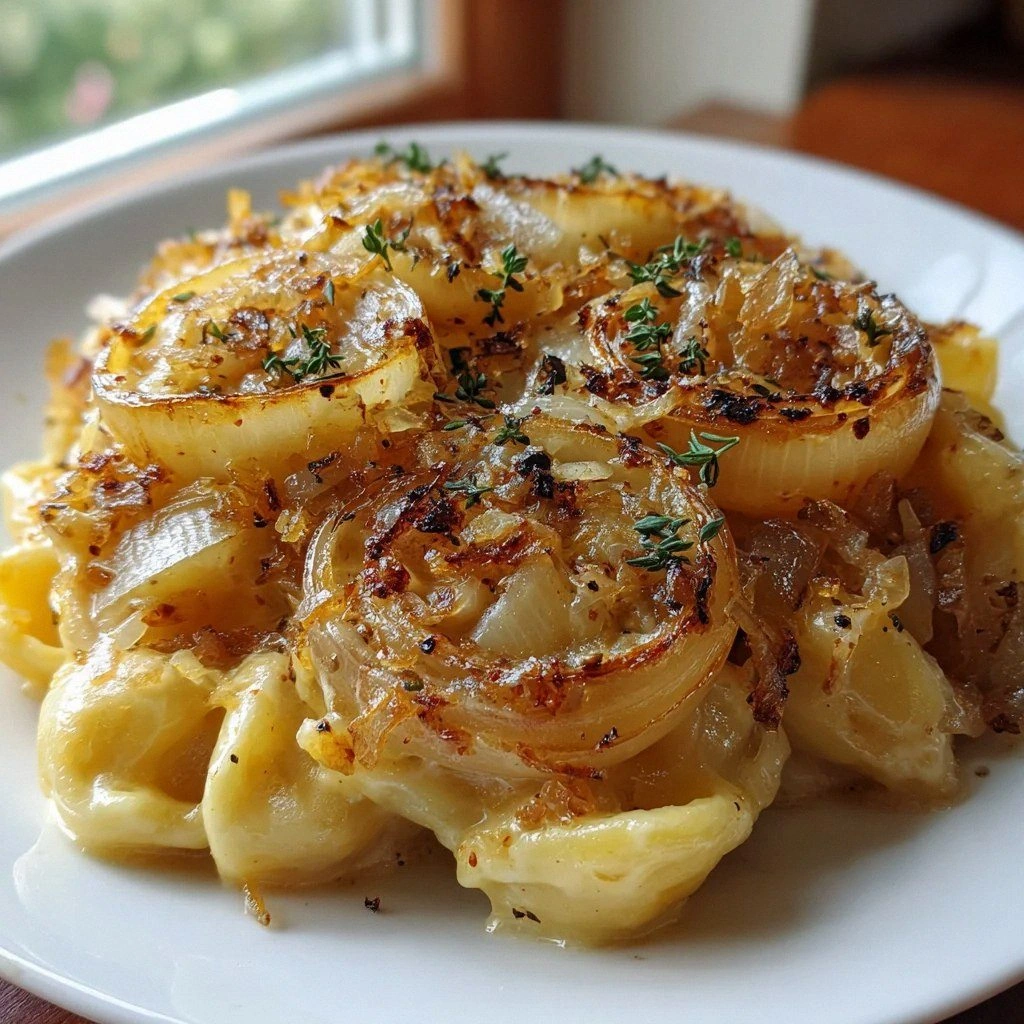
Picture this: I’m in the middle of a Sunday brunch, a pot of soup simmering, and my oven timer beeps. I’m craving something that feels like a hug in a bowl, but the usual French onion soup is too heavy and the pasta dishes I’ve tried so far are either bland or over‑cooked. I stared at the onions, feeling a little rebellious, and decided to combine the best parts of both worlds into a single pot. That night, I invented what I now call the Creamy One‑Pot French Onion Pa.
The first thing that hit me was the aroma—sizzling garlic and onions dancing with butter and olive oil, the scent rising like a promise of comfort. The sound of onions caramelizing was a deep, satisfying crackle that made the kitchen feel alive. As the onions turned golden, the wine sloshed in, cutting through the sweetness with a bright, almost citrusy tang. The beef stock bubbled, filling the air with a savory, umami-rich perfume that made my mouth water. When the pasta finally swam in, it soaked up the sauce, turning each strand into a silky, creamy thread that clung together like a velvety blanket.
What makes this version stand out isn’t just the combination of flavors; it’s the way each component elevates the others. The heavy cream and Gruyère create a luscious coating that feels like a warm blanket on the pasta, while the nutmeg and thyme add a subtle depth that keeps the dish from feeling flat. I dared you to taste this and not go back for seconds—once you do, the idea of a plain bowl of pasta will seem like a distant memory. I’ll be honest—half the batch disappeared before anyone else got a chance to try it, and that’s the proof of its irresistible charm.
Most recipes get this completely wrong by either over‑cooking the onions or under‑seasoning the broth. Here, I found the sweet spot that gives the sauce a beautiful, thick texture without losing its brightness. The technique of deglazing with wine right after the onions are caramelized is a game‑changer that unlocks the full flavor of the stock. Picture yourself pulling this out of the pot, the whole kitchen smelling incredible, and every bite feeling like a comforting hug. Let me walk you through every single step—by the end, you’ll wonder how you ever made it any other way.
What Makes This Version Stand Out
- Taste: The caramelized onions create a natural sweetness that balances the savory beef stock, while the splash of dry white wine lifts the entire dish with a subtle acidity.
- Texture: The heavy cream and Gruyère melt into a velvety sauce that coats the pasta, and the final Parmesan layer gives a slightly crispy finish that feels like a golden crown.
- Ingredient Quality: Using fresh thyme and real butter instead of substitutes elevates the dish from good to unforgettable.
- Simplicity: One pot, one pan, and a single stove top—no separate sauce or side dish needed.
- Make‑Ahead Potential: This dish tastes even better the next day when the flavors have had time to meld.
- Crowd Reaction: Guests often ask for the recipe after the first bite, and I’ve seen people come back for seconds, thirds, and sometimes a fourth plate.
Inside the Ingredient List
The Flavor Base
The onions are the heart of this dish—large yellow onions bring a natural sweetness that caramelizes beautifully when cooked slowly. They also provide a subtle crunch when you’re looking for a textural contrast. If you skip them, the sauce will feel flat and lack that comforting, nostalgic flavor. For a twist, try using a mix of sweet and red onions to add a pop of color and a hint of tang.
Garlic is the second star; it adds a sharp, aromatic kick that cuts through the richness of the butter and cream. Crushing the cloves rather than slicing them releases more flavor, so don’t be shy with the garlic. If you’re sensitive to garlic, a pinch of garlic powder will still provide that essential depth, though it won’t be as pronounced.
The Texture Crew
Pasta is the vehicle that carries the sauce to your palate. I use a hearty, slightly al dente pasta that can soak up the broth without becoming mushy. If you prefer a lighter feel, switch to a smaller pasta shape like orzo or small shells. The key is to cook it in the same pot with the sauce, so it absorbs the flavors and stays perfectly cooked.
Butter and olive oil work together to create a smooth, rich base for the onions. The butter adds depth and a subtle nutty flavor, while the olive oil provides a gentle lift that prevents the onions from burning. A good rule of thumb: use equal parts butter and oil for the best balance of flavor and texture.
The Unexpected Star
Dry white wine is the secret ingredient that elevates this dish from ordinary to extraordinary. It deglazes the pot, lifting all the browned bits, and adds a bright, almost citrusy note that cuts through the richness. If you’re not a fan of wine, try using a splash of apple cider vinegar or a light broth instead; just keep the acidity in mind.
Worcestershire sauce adds a subtle umami punch that enhances the beef stock’s flavor. A tablespoon is enough to bring everything together without overwhelming the dish. If you’re on a gluten‑free diet, look for a gluten‑free Worcestershire or a small amount of soy sauce as a substitute.
The Final Flourish
Heavy cream and the combination of Gruyère and Parmesan cheeses create a luxurious sauce that coats the pasta like a velvet blanket. The cream adds body, while the cheeses melt into a gooey, golden top that’s both savory and slightly sweet. If you prefer a lower-fat version, replace the cream with half‑and‑half or a dairy‑free alternative, but the sauce will be a bit thinner.
Fresh thyme brings a bright, herbaceous note that cuts through the richness and adds a subtle piney aroma. Use whole sprigs if you want to serve the dish as a complete meal, or finely chop the leaves for a more uniform flavor distribution. Thyme also pairs beautifully with the nutmeg, creating a warm, earthy undertone that feels comforting.
Everything’s prepped? Good. Let’s get into the real action and make a pot of pure comfort.
The Method — Step by Step
- Heat a large, wide skillet over medium heat. Add the olive oil and let it shimmer. Drop in the butter, allowing it to melt into a golden foam. Once the butter stops foaming, add the sliced onions. Sauté, stirring frequently, until they’re translucent and start to caramelize—about 10 minutes. The aroma should be sweet and inviting.
- Add the minced garlic to the pot, letting it toast for 30 seconds until fragrant. Then pour in the dry white wine to deglaze the pan, scraping up all the browned bits. The wine should reduce by half, concentrating its bright acidity. This step is crucial for unlocking the full flavor of the onions.
- Stir in the Worcestershire sauce, then pour in the beef stock. Bring the mixture to a gentle boil, then reduce to a simmer. Add the whole thyme sprigs and the pinch of nutmeg. Let the broth simmer for 10 minutes; the flavors will meld beautifully.
- Add the pasta directly to the pot, ensuring it’s fully submerged in the liquid. Stir immediately to prevent sticking. Cook according to package instructions until the pasta is al dente, usually around 8–10 minutes. Halfway through, taste the broth and adjust seasoning with black pepper if needed.
- Once the pasta is cooked, stir in the heavy cream, Gruyère, and Parmesan cheeses. The cheeses will melt into a silky sauce, coating every strand. Let the mixture simmer for an additional 2 minutes until the sauce thickens and becomes glossy.
- Remove the thyme sprigs and discard them. Give the dish a final stir, then taste again. If it feels a bit dry, splash in a little more stock or a splash of water to reach your desired consistency.
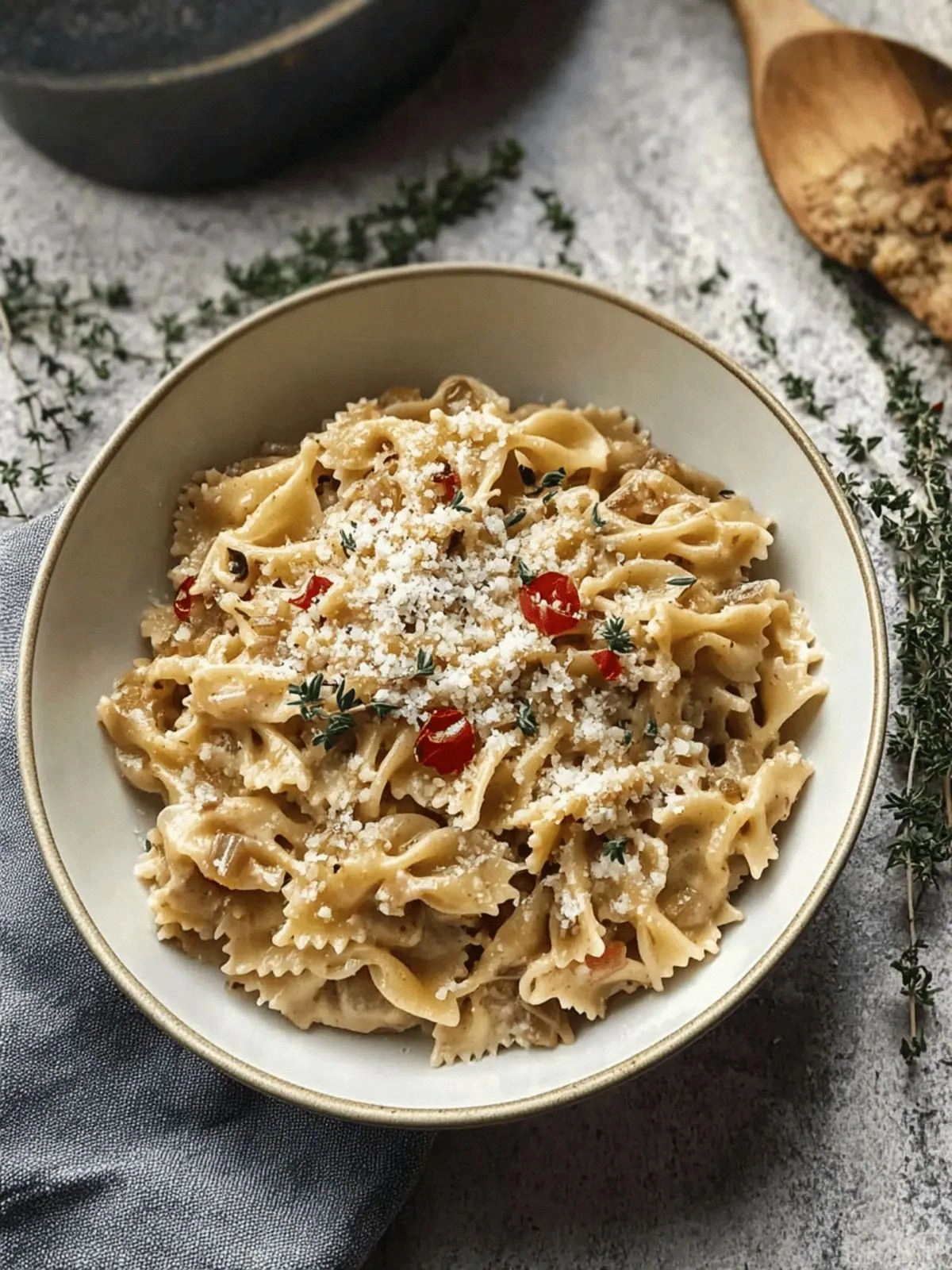
- Serve hot, topped with a sprinkle of extra Parmesan and a few fresh thyme leaves if you like. The dish should look like a golden, creamy river with a hint of caramelized onion specks dancing on the surface.
- Enjoy immediately, or let it cool slightly before storing. If you’re planning to reheat, remember to add a splash of water or stock to keep it creamy. This dish is so comforting that even a second plate is a treat.
That's it— you did it. But hold on, I've got a few more tricks that'll take this to another level. These insider tips will help you avoid common pitfalls and elevate the dish to restaurant‑quality.
Insider Tricks for Flawless Results
The Temperature Rule Nobody Follows
Keep the heat on medium-low once you’ve added the pasta. Too high, and the sauce will break; too low, and the pasta will overcook. I’ve found that a steady simmer allows the pasta to absorb the broth while the sauce thickens just right. If you’re in a hurry, you can briefly bring the pot to a boil, but quickly reduce the heat to avoid over‑cooking.
Why Your Nose Knows Best
Smell the sauce as it simmers. A faint, sweet aroma signals the onions are perfectly caramelized. If you notice a sharp, metallic scent, the onions may be burning. Adjust the heat or add a splash of water to neutralize the flavor. Trust your nose—it’s the best judge of doneness.
The 5-Minute Rest That Changes Everything
After you finish cooking, let the pot sit for 5 minutes off the heat. The pasta will continue to steam, absorbing the remaining broth and becoming even more flavorful. This short rest also allows the cheeses to set into a silky coating, preventing the sauce from separating when you serve.
The Secret of a Golden Top
If you like a crispy finish, finish the dish under a broiler for 2 minutes. Keep a close eye on it; the cheese can burn quickly. The result is a golden, slightly crisp top that contrasts beautifully with the creamy interior.
The Quick Fix for a Sticky Pot
If the sauce thickens too much, simply add a splash of stock or water to reach your desired consistency. This keeps the texture silky without diluting the flavor. I’ve used this trick when the pot was too dry after a long simmer.
Creative Twists and Variations
Cheesy Veggie Boost
Add a cup of sautéed mushrooms and a handful of spinach during the last 3 minutes of cooking. The mushrooms deepen the umami, while the spinach adds a pop of color and nutrition. This version is perfect for a vegetarian crowd.
Spicy Kick
Incorporate a pinch of crushed red pepper flakes when sautéing the onions. The heat balances the richness of the cream and cheeses, creating a bold flavor profile that’s surprisingly harmonious.
Herb‑Infused Variation
Replace fresh thyme with a mixture of rosemary, sage, and oregano. This herb blend gives the dish a Mediterranean feel and adds an aromatic complexity that pairs well with the beef stock.
Low‑Carb Edition
Swap the pasta for spiralized zucchini or shirataki noodles. The dish still delivers the same creamy, savory experience, but with a lighter carb profile that’s great for keto or low‑carb diets.
Breakfast Twist
Serve the dish with a poached egg on top. The runny yolk creates a silky sauce that blends with the creamy base, turning it into a decadent brunch option.
Gluten‑Free Take
Use gluten‑free pasta and ensure your stock and Worcestershire sauce are gluten‑free. The flavors remain intact, and the dish stays comforting for those with dietary restrictions.
Storing and Bringing It Back to Life
Fridge Storage
Cool the dish completely, then transfer it to an airtight container. Store in the refrigerator for up to 3 days. The sauce will thicken slightly, so a quick stir before reheating will restore its creamy consistency.
Freezer Friendly
Place the cooled dish in a freezer‑safe container, leaving a small headspace for expansion. Freeze for up to 2 months. When ready to eat, thaw overnight in the fridge and reheat gently.
Best Reheating Method
Reheat on low heat, adding a splash of water or stock to loosen the sauce. Stir frequently to prevent the cheeses from separating. Serve immediately for the best texture and flavor.