Picture this: I’m standing in a cramped apartment kitchen, the stove is on, and my fridge is a rainbow of vegetables that I’ve been meaning to use. I open the door to a sizzling skillet, the air thick with the scent of garlic and fresh cilantro, and I realize I’ve just created a culinary masterpiece that will have everyone begging for seconds. I dare you to taste this and not go back for a second bite. The moment the first bite hits your tongue, the smoky chipotle, the bright lime, and the tender steak melt together like a perfectly choreographed dance.
It’s not just the flavor; it’s the texture. The steak is seared to a caramelized crust that crackles like thin ice, while the riced cauliflower stays fluffy, absorbing the spices like a sponge. The bell pepper slices are crisp enough to provide a satisfying bite, and the onions, caramelized just right, add a subtle sweetness that balances the heat. Every element feels intentional, every bite feels like a revelation.
I’ve spent the last year hunting down the ultimate high‑protein bowl that can be whipped up in under an hour, and this version is hands down the best you’ll ever make at home. Most recipes get this completely wrong by overcooking the steak or under‑seasoning the vegetables. Here, the secret lies in the dual‑oil technique that keeps the steak juicy and the veggies vibrant. The result is a bowl that’s not only protein‑packed but also a feast for the senses.
I’ll be honest—when I first cooked this, I ate half the batch before anyone else got to try it. The aroma alone was enough to draw a crowd, and the taste was so satisfying that I started adding extra lime juice on the fly. If you’ve ever struggled with a protein bowl that feels bland or dry, you’re not alone—and I’ve got the fix.
Stay with me here—this is worth it. By the end of this guide, you’ll wonder how you ever made it any other way. Let me walk you through every single step, from the first sizzle to the last sprinkle of cilantro, so you can recreate this masterpiece in your own kitchen.
What Makes This Version Stand Out
- Flavor: The smoky chipotle peppers in adobo sauce give the dish depth that traditional fajita seasoning can’t match, creating a complex heat that lingers pleasantly on the palate.
- Texture: The steak is seared to a perfect caramelized crust, while the riced cauliflower stays fluffy, providing a delightful contrast that keeps each bite interesting.
- Protein Power: Skirt steak is a lean, high‑protein cut that delivers muscle‑building nutrition without excess fat, making this bowl ideal for fitness enthusiasts.
- Low‑Carb Friendly: Replacing rice with cauliflower keeps the carb count low while still offering bulk and satisfaction, perfect for keto or low‑glycemic diets.
- Color Palette: The vibrant red bell pepper and bright lime juice create a visual feast that makes the dish as appealing to the eye as it is to the taste buds.
- Ease of Prep: The method requires minimal chopping and a single pan, so you can have a gourmet meal ready in less than 45 minutes.
- Make‑Ahead Potential: The bowl stays fresh for 48 hours in the fridge, and the flavors actually deepen, making it a great option for meal prep.
- Crowd‑Pleaser: Friends rave about the balance of heat and acidity, and the dish is so versatile that it works for dinner, lunch, or even a post‑workout snack.
Alright, let's break down exactly what goes into this masterpiece...
Inside the Ingredient List
The Flavor Base
Chipotle Peppers in Adobo Sauce: These smoky, slightly sweet peppers provide the backbone of the dish. They infuse the steak and veggies with a deep, complex heat that lingers without overpowering. If you skip them, the bowl will taste bland and forgettable. For a milder version, replace with roasted poblano or a dash of smoked paprika.
Fresh Lime Juice: Lime adds brightness and balances the smoky flavor. Its acidity cuts through the richness of the steak, creating a harmonious taste profile. If you’re out of limes, a splash of lemon juice works, though the flavor will shift slightly.
The Protein Crew
Skirt Steak: This cut is prized for its marbling and flavor. When seared correctly, it develops a caramelized crust that locks in juices. Choosing a fresh, well-marbled steak is essential; a leaner cut will result in a drier outcome.
Olive or Avocado Oil: Two tablespoons are used for the steak’s sear, providing a high smoke point and subtle flavor. The remaining tablespoon and half tablespoon are reserved for sautéing the vegetables, ensuring each component retains its integrity.
The Texture Crew
Riced Cauliflower: This low‑carb substitute adds bulk without compromising texture. It absorbs the seasoning and remains fluffy, offering a satisfying bite that mimics rice. If you prefer a different grain, try quinoa or shredded zucchini.
Red Bell Pepper & Yellow Onion: These vegetables provide crunch and sweetness. Sliced thinly, they cook quickly and retain their vibrant colors, adding visual appeal and a subtle caramelization that sweetens the bowl.
The Unexpected Star
Cumin: This earthy spice grounds the dish, balancing the heat of the chipotle. A pinch of cumin can transform a simple bowl into a flavor explosion. If you’re avoiding cumin, a dash of coriander or smoked paprika can serve as a suitable alternative.
Everything's prepped? Good. Let's get into the real action...
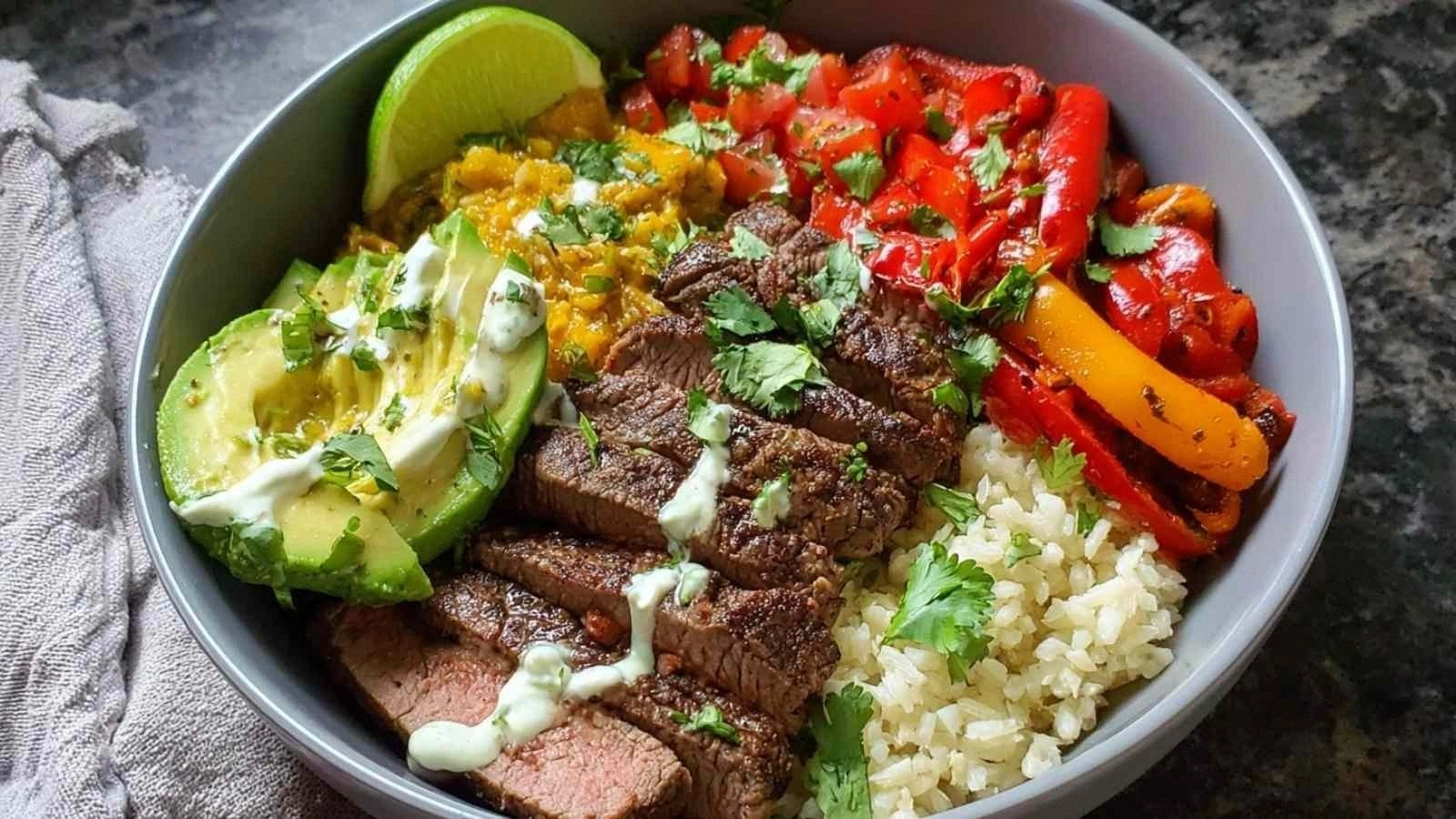
The Method — Step by Step
- Marinate the steak: In a bowl, combine the chipotle peppers, lime juice, cumin, and 2 tablespoons of oil. Add the steak, cover, and refrigerate for at least 30 minutes (or overnight for deeper flavor). When you open the fridge, you’ll notice a fragrant, smoky aroma that signals the steak is ready to be cooked.
- Prepare the veggies: Slice the red bell pepper into thin strips and quarter the yellow onion. Rinse the cauliflower, break it into florets, and pulse in a food processor until it resembles rice. Set aside.
- Heat the skillet: Place a cast‑iron or heavy‑bottom pan over medium‑high heat. Add 2 tablespoons of oil and allow it to shimmer. The oil should be hot but not smoking—this ensures a perfect sear.
- Sear the steak: Remove the steak from the bowl and pat it dry—this is key to achieving a caramelized crust. Place it in the hot pan and sear each side for 3–4 minutes, depending on thickness. You’ll hear a satisfying sizzle that signals the Maillard reaction is happening.
- Rest the steak: Transfer the steak to a cutting board and let it rest for 5 minutes. This allows the juices to redistribute, ensuring every bite stays moist. While it rests, you can move on to the vegetables.
- Sauté the veggies: In the same pan, add 1 tablespoon of oil. Toss in the bell pepper and onion, cooking for 2 minutes until they start to soften. Then add the riced cauliflower, ½ tablespoon of oil, and a pinch of salt. Cook for an additional 4–5 minutes, stirring frequently.
- Slice the steak: While the veggies finish cooking, slice the rested steak against the grain into thin strips. The grain runs the length of the steak; slicing against it shortens the fibers and makes the meat incredibly tender.
- Assemble the bowl: Start with a generous mound of cauliflower rice, top with the sautéed peppers and onions, then arrange the steak strips on top. Finish with a squeeze of fresh lime, a sprinkle of chopped cilantro, and a dash of hot sauce if you like an extra kick.
That's it — you did it. But hold on, I've got a few more tricks that'll take this to another level...
Insider Tricks for Flawless Results
The Temperature Rule Nobody Follows
The key to a juicy steak is a hot pan. If the pan is too cool, the steak will steam instead of sear, resulting in a soggy exterior. Aim for a pan temperature of 400°F; you’ll see a steady hiss when you add the oil. If you’re using a non‑stick pan, preheat it for a few minutes before adding the oil.
Why Your Nose Knows Best
Smell is your best indicator of doneness. When the steak releases a rich, smoky aroma and the vegetables emit a caramelized scent, you’re at the sweet spot. Trust your nose; it’s the most reliable tool in the kitchen.
The 5-Minute Rest That Changes Everything
Resting the steak is not just a suggestion—it's a necessity. The muscle fibers relax and redistribute juices, which keeps the steak moist. Skipping this step often leads to a dry bite that ruins the whole bowl.
Keep the Cauliflower Fluffy
Avoid overcrowding the pan when sautéing cauliflower. If you add too much at once, it steams and loses its fluffiness. Cook in batches or spread it out to maintain that airy texture.
Finish with a Burst of Freshness
A final squeeze of lime right before serving brightens every ingredient, cutting through the richness and adding a zesty punch. It also brings a cohesive flavor profile that ties everything together.
The Perfect Garnish
A handful of fresh cilantro, a sprinkle of toasted pepitas, and a drizzle of Greek yogurt or sour cream elevate the bowl from simple to spectacular. They add creaminess, crunch, and an herbal note that balances the heat.
Creative Twists and Variations
This recipe is a playground. Here are some of my favorite ways to switch things up:
Spicy Shrimp Fajita Bowl
Swap the steak for shrimp. Marinate the shrimp in lime, chipotle, and a pinch of garlic for 10 minutes. Sauté quickly—shrimp cooks in 2–3 minutes—and serve over cauliflower rice for a seafood twist.
Mediterranean Chicken Bowl
Replace the steak with grilled chicken breast marinated in lemon, oregano, and olive oil. Add diced tomatoes, kalamata olives, and a drizzle of tzatziki for a Greek-inspired flavor profile.
Vegan Power Bowl
Use marinated tofu or tempeh instead of steak. Press the tofu to remove excess moisture, then sear with the same spice blend. The tofu will absorb the smoky chipotle, creating a hearty vegan option.
Breakfast Fajita Bowl
Swap the steak for scrambled eggs. Add sautéed peppers and onions, then top with avocado slices and a sprinkle of cheddar. This breakfast version is protein‑dense and perfect for a post‑gym meal.
Southwestern Taco Bowl
Add a spoonful of salsa, a dollop of guacamole, and a sprinkle of shredded cheese. This variation turns the bowl into a taco‑inspired delight that’s perfect for a casual dinner.
Pesto Cauliflower Bowl
Stir in a few spoonfuls of basil pesto after cooking the cauliflower. The herbal flavor pairs beautifully with the smoky steak and bright lime, creating a fresh, herbaceous twist.
Storing and Bringing It Back to Life
Fridge Storage
Store the assembled bowl in an airtight container for up to 48 hours. Keep the cauliflower rice separate from the steak and veggies if you plan to reheat later, as the rice can become soggy when reheated. Label the date to track freshness.
Freezer Friendly
For longer storage, freeze the components separately. The steak and veggies freeze well for up to 3 months. Thaw in the fridge overnight, then reheat in a skillet. The cauliflower rice can be frozen but may lose some texture; reheat gently in a microwave with a splash of water.
Best Reheating Method
Reheat the bowl in a skillet over medium heat, adding a splash of water or broth to keep the cauliflower from drying out. Stir frequently until everything is heated through. If you’re in a rush, microwave the components separately, then combine and stir.
Add a tiny splash of water before reheating—it steams back to perfection and keeps the cauliflower fluffy. This trick prevents the bowl from turning into a dry, unappetizing mess.