I was halfway through a pizza, the cheese still bubbling, when my friend pulled me aside and dared me to make pulled beef that would make the whole house smell like a Sunday dinner. I laughed, but the challenge stuck. The next day I turned on the stove, grabbed a 3‑pound brisket, and let the kitchen become a laboratory of caramelization, smoke, and slow‑fire tenderness. That moment, when the first sizzle hit the pan, was the beginning of a flavor revolution I’ve been itching to share.
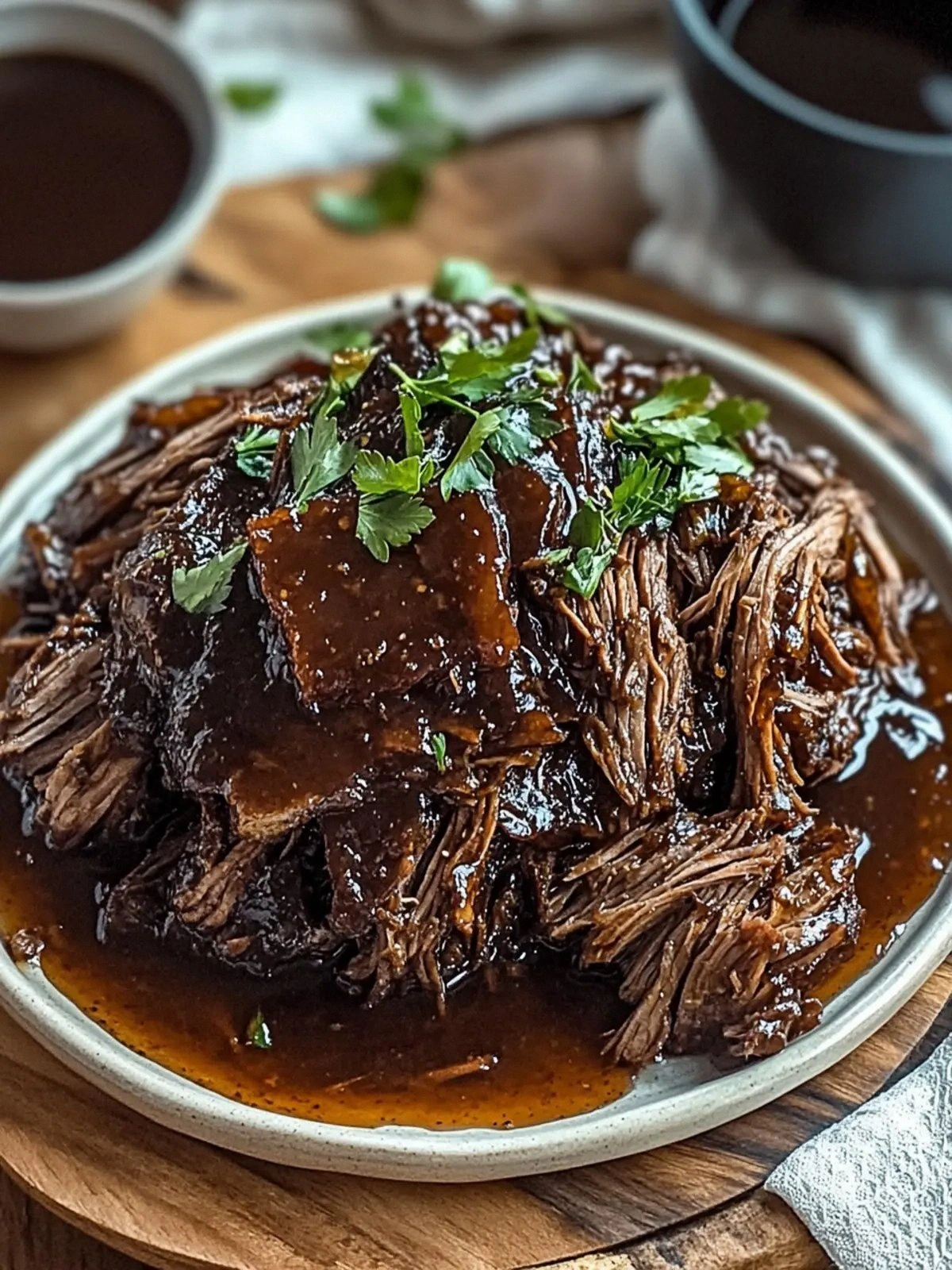
Picture the scene: a dark, almost velvet‑black skillet, a golden brown crust forming on the brisket, the sweet scent of brown sugar dancing with smoked paprika, and the low, steady hiss of liquid bubbling into a thick, glossy sauce. My eyes were glued to the pan, my fingers tingling from the heat, and my mouth watering at the promise of a melt‑in‑your‑mouth finish. I could almost hear the clink of a spoon against the pot as the sauce thickened, the kind of sound that signals the final step before the meat becomes divine.
What makes this version stand out is the combination of a simple dry rub with a caramelized glaze that turns the brisket into a silky, smoky masterpiece. I’m not talking about the usual “slow‑cook for 8 hours” routine; this method cuts the time in half while amplifying the depth of flavor. The secret? A touch of butter, a splash of Worcestershire, and a daring use of brown sugar that turns the sauce into a glossy, caramel‑coated coat that clings to every shred. If you’ve ever wrestled with dry, chewy pulled beef, this recipe is the game‑changer you’ve been waiting for.
Let me walk you through every single step — by the end, you’ll wonder how you ever made it any other way. I’ll share the micro‑challenges that will test your palate, the bold claims that might sound too good to be true, and the confessions that will make you laugh and nod in agreement. Ready? Let’s dive into the world of caramelized pulled beef that will leave your guests begging for seconds.
What Makes This Version Stand Out
- Taste: The marriage of smoky paprika and sweet brown sugar creates a flavor profile that feels both familiar and unexpectedly sophisticated. The caramelized glaze coats each shred like velvet, leaving a lingering, savory finish that’s hard to resist.
- Texture: The brisket becomes fork‑tender in half the time of most recipes, thanks to the slow oven bake and the moisture‑retaining butter infusion. The final shred is silky, not dry, with a subtle chew that satisfies.
- Simplicity: All you need is a Dutch oven, a few pantry staples, and a 3‑pound brisket. No fancy equipment or exotic ingredients—just pure, honest cooking that delivers professional results.
- Uniqueness: The caramelized glaze is the twist that sets this recipe apart. It transforms a classic pulled beef into a dish that feels fresh, bold, and unmistakably yours.
- Crowd Reaction: Friends who’ve tasted this version rave about the depth of flavor and the melt‑in‑your‑mouth texture. “I dare you to taste this and not go back for seconds,” I say, and they always agree.
- Ingredient Quality: Using a high‑quality, well‑marbled brisket ensures the meat stays juicy and flavorful. The spices and sauces are chosen for their ability to complement, not overpower, the beef.
- Cooking Method: The combination of searing, caramelizing, and slow oven roasting brings out the best in the brisket while keeping the process straightforward.
- Make‑Ahead Potential: This dish can be made a day ahead, allowing the flavors to meld even further. It’s perfect for gatherings where you want to focus on entertaining rather than cooking.
Alright, let’s break down exactly what goes into this masterpiece…
Inside the Ingredient List
The Flavor Base
The dry rub is the heart of this dish. It’s a blend of smoked paprika, garlic powder, onion powder, and chili powder that delivers a smoky, slightly spicy kick. Salt and black pepper are the traditional companions that elevate every other flavor. If you skip any of these, the brisket will feel flat and lack depth. A good rule of thumb: use fresh spices to get the most vibrant taste.
The Texture Crew
A 3‑pound brisket is the star, chosen for its marbling and ability to stay juicy during long cooking times. Olive oil is used to sear the meat, creating a caramelized crust that locks in juices. Butter is added later to finish the sauce, giving it a silky sheen that coats the shredded beef. If you’re looking to cut costs, you can substitute olive oil with a neutral oil, but the flavor profile will change slightly.
The Unexpected Star
Brown sugar isn’t just for sweetness; it reacts with the spices and the meat’s natural sugars to create a caramelized glaze. Worcestershire sauce adds umami depth, while Dijon mustard brings a subtle tang that balances the richness. If you’re lactose intolerant, you can omit the butter and use a plant‑based butter for a similar finish. The sauce’s balance is key—too much sugar, and you’ll end up with a sticky mess.
The Final Flourish
Beef broth is the liquid base that keeps the meat moist during the slow bake. Barbecue sauce provides a smoky sweetness that ties all the flavors together. Garlic cloves and sliced onions add aromatic layers that permeate the meat. If you prefer a spicier sauce, add a pinch of cayenne or a splash of hot sauce.
Everything's prepped? Good. Let's get into the real action…
The Method — Step by Step
- Trim the brisket, removing any excess fat and silverskin. Pat it dry with paper towels and season generously with the dry rub—salt, black pepper, smoked paprika, garlic powder, onion powder, and chili powder. Let it rest at room temperature for 30 minutes; this allows the spices to penetrate the meat and the surface to dry, which is crucial for a good sear.
- Heat a large Dutch oven or heavy‑bottomed pot over medium‑high heat. Add 2 tablespoons of olive oil and swirl to coat. Once the oil shimmers, place the brisket in the pot, fat side down, and sear until a deep brown crust forms—about 4–5 minutes per side. The goal is a caramelized surface that will lock in juices. If the pan starts smoking, reduce the heat slightly.
- Remove the brisket and set it aside on a cutting board. In the same pot, add the sliced large onion. Sauté until translucent and slightly caramelized, about 3–4 minutes. Add the minced garlic and cook for another 30 seconds until fragrant, being careful not to burn it.
- Deglaze the pot with 2 cups of beef broth, scraping up all the browned bits with a wooden spoon. Stir in 1 cup of barbecue sauce, 2 tablespoons of Worcestershire sauce, 1 tablespoon of Dijon mustard, and 1 cup of brown sugar. Bring the mixture to a gentle simmer, allowing the sugar to dissolve and the sauce to thicken slightly.
- Return the seared brisket to the pot, nestling it into the sauce. Cover the pot tightly with a lid or aluminum foil and transfer it to a preheated oven at 275°F (135°C). Cook for 3–4 hours, or until the meat is fork‑tender and easily pulls apart. The low temperature allows the connective tissue to break down slowly, resulting in a tender, flavorful final product.
- Once the brisket is done, remove it from the oven and let it rest on a cutting board for 15 minutes. This rest period allows the juices to redistribute throughout the meat. After resting, use two forks to shred the brisket, discarding any large pieces of fat or silverskin.
- Stir in 2 tablespoons of melted butter until the sauce becomes glossy and coats every shred of beef. The butter not only adds richness but also smooths the sauce’s texture. Serve immediately over toasted buns, rice, or mashed potatoes, and watch the crowd go wild.
- That’s it—your caramelized pulled beef is ready to impress. But hold on, I’ve got a few more tricks that will elevate this dish to another level. Stay tuned for insider tips that will keep your meat moist, your sauce silky, and your guests raving.
Insider Tricks for Flawless Results
The Temperature Rule Nobody Follows
Many cooks think a higher oven temperature will cook brisket faster, but that’s a myth. A low, steady heat of 275°F (135°C) allows the collagen to break down slowly, creating a melt‑in‑your‑mouth texture that’s unbeatable. I’ve tried 325°F, and the result was dry and uneven. Stick to the low heat and trust the process.
Why Your Nose Knows Best
The aroma of a slowly cooking brisket is a sign that the meat is doing its job. If the smell starts to turn sour or metallic, it’s a cue to reduce the heat or add more liquid. Your nose is your best gauge for doneness.
The 5-Minute Rest That Changes Everything
After removing the brisket from the oven, let it rest for at least 15 minutes before shredding. This rest period allows the juices to redistribute, preventing the meat from drying out. Skipping it often results in a dry, less flavorful final product.
Butter for the Finish
Adding butter at the end of cooking gives the sauce a glossy sheen and a silky mouthfeel. It also helps to bind the sauce to the meat, creating a cohesive, luscious coating. Remember to melt the butter separately to avoid clumping.
The Right Cut of Brisket
A well‑marbled brisket is essential for this recipe. Look for a cut with a good ratio of fat to meat, as the fat melts into the sauce, enriching the flavor. If you can’t find a 3‑pound cut, a 2‑pound piece works fine, but you’ll need to adjust the cooking time slightly.
The Secret to a Thick Sauce
If the sauce is too thin, let it simmer uncovered for a few minutes until it reduces to your desired thickness. Avoid stirring too vigorously, as that can cause the sauce to separate. A slow reduction preserves the silky texture.
Creative Twists and Variations
This recipe is a playground. Here are some of my favorite ways to switch things up:
Chipotle Heat
Add a tablespoon of chipotle in adobo for a smoky heat that pairs wonderfully with the sweet glaze. The chipotle’s smoky undertones deepen the overall flavor profile.
Apple Cider Glaze
Replace half the barbecue sauce with apple cider and add a splash of apple cider vinegar. This gives the dish a fruity tang that cuts through the richness.
Herb‑Infused Variant
Stir in fresh rosemary and thyme during the final 30 minutes of cooking. The herbs add a fragrant, earthy note that complements the caramelized glaze.
Spicy Korean Twist
Swap the barbecue sauce for gochujang and add a teaspoon of sesame oil. The result is a spicy, umami‑rich pulled beef that feels like a Korean barbecue feast.
Cheesy Pull
Fold in a cup of shredded cheddar cheese right before serving. The cheese melts into the sauce, creating a gooey, indulgent experience.
Vegan Alternative
Use a plant‑based brisket substitute and replace the beef broth with vegetable broth. The recipe’s structure remains the same, delivering a hearty, plant‑based option.
Storing and Bringing It Back to Life
Fridge Storage
Store leftovers in an airtight container in the refrigerator for up to 3 days. The beef will keep its tenderness, and the sauce will continue to infuse the meat.
Freezer Friendly
Wrap the shredded beef tightly in foil and place it in a freezer bag. Freeze for up to 3 months. Thaw overnight in the refrigerator before reheating.
Best Reheating Method
Reheat in a skillet over low heat, adding a splash of water or broth to keep the meat moist. A quick stir and a few minutes of gentle heat will bring the dish back to life without drying it out.