Picture this: a Saturday afternoon, the radio blasting old‑school funk, the kitchen smelling of something that could only be called “good.” I was halfway through a pot of rice, the timer blinking, when my friend called, “You’ve gotta try the jambalaya I made last week!” I laughed, but the curiosity was too strong to ignore. The kitchen had turned into a chaotic symphony of sizzling onions, the sharp pop of garlic, and the deep, smoky scent of andouille sausage curling through the air. It felt like the walls themselves were humming a Mardi Gras anthem, and I was the unsuspecting conductor.
I stared at the pot, the rice still clinging to the bottom like a stubborn coat of paint, and wondered: why does this dish always end up bland or too watery? The answer, I realized, was a missing ingredient and a missing technique. The secret is a delicate balance of smoky meats, fresh shrimp, and a perfectly seasoned broth that doesn’t drown the rice. I discovered that a single splash of tomato paste, a pinch of smoked paprika, and a slow, steady simmer can transform an ordinary pot into a bowl of liquid gold. If you’re ready to turn your kitchen into a carnival of flavor, keep reading—because this is hands down the best jambalaya you’ll ever make at home.
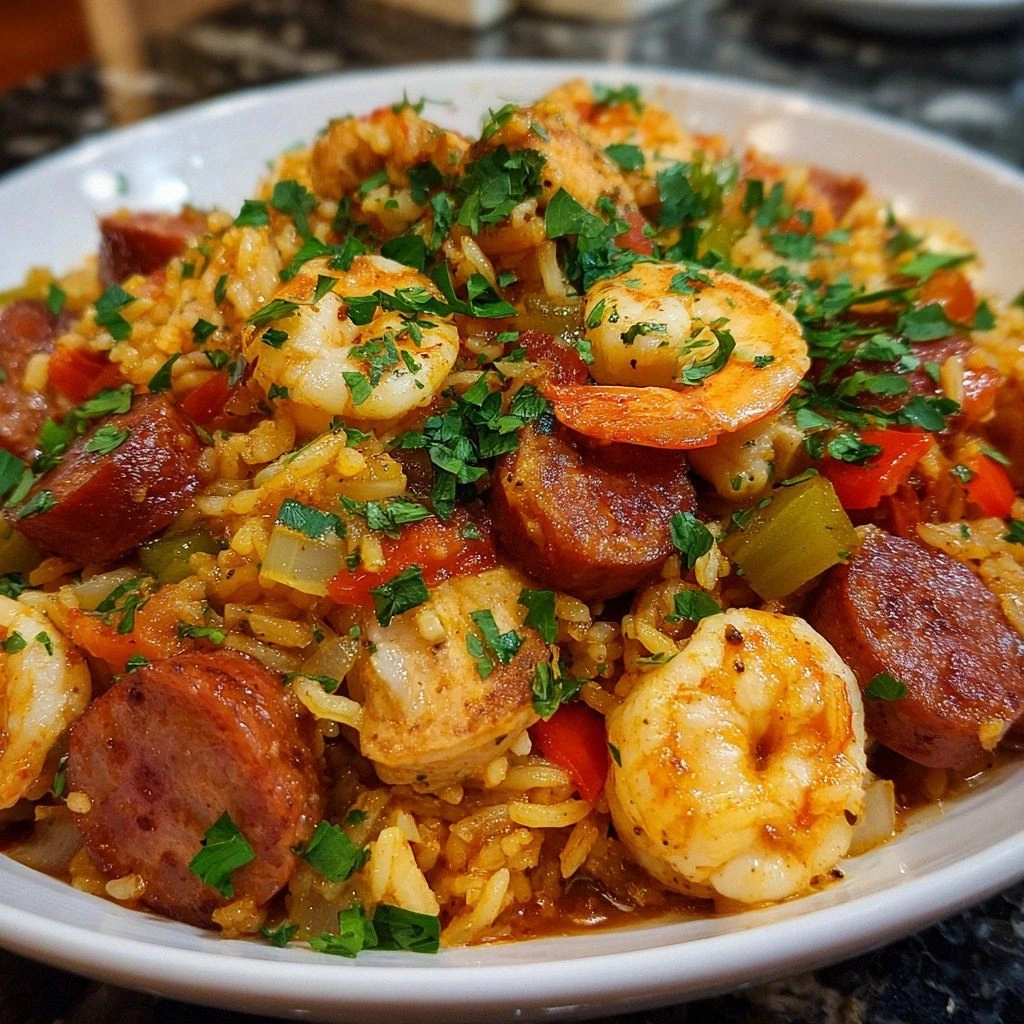
I dare you to taste this and not go back for seconds. That first spoonful is a burst of caramelized onions, a whisper of pepper, and a smoky echo that lingers like a good jazz solo. The texture is a dance between tender shrimp and juicy chicken, all wrapped in a sauce that clings to each grain of rice like velvet. It’s the kind of dish that turns a simple dinner into an instant celebration. Picture yourself pulling this out of the pot, the whole kitchen smelling incredible, and everyone at the table leaning in, eyes wide, mouths open.
I’ve been experimenting with jambalaya for years, but this version is different. I’ll walk you through every single step, from the first chop to the final garnish, and by the end you’ll wonder how you ever cooked it any other way. The technique is simple, the flavors are bold, and the result? A dish that’s as comforting as a hug and as exciting as a fireworks show. Ready? Let’s dive in.
What Makes This Version Stand Out
- Flavor Depth: The combination of smoked sausage, fresh shrimp, and chicken thighs creates layers that evolve with every bite.
- Texture Contrast: Tender shrimp against the firmness of chicken, all balanced by a rice base that absorbs the sauce without becoming mushy.
- Authentic Spice: Cajun seasoning is the heart of the dish, but a subtle hint of smoked paprika elevates the heat without overwhelming.
- Simple Prep: Every ingredient is ready to go in less than 15 minutes—no complicated marinades or pre‑soaking.
- Crowd‑Pleaser: Whether it’s a family dinner or a potluck, this jambalaya brings people together with its vibrant colors and bold flavors.
- Make‑Ahead Friendly: The flavors deepen overnight, making it perfect for a busy weekday evening.
- Ingredient Quality: Using fresh, high‑quality meats and spices turns a humble dish into a gourmet experience.
- Versatile Base: Swap proteins or add vegetables to suit dietary preferences without compromising taste.
Inside the Ingredient List
The Flavor Base
Onion: The sweet, caramelized backbone of any jambalaya. When sautéed until golden, it releases natural sugars that form a rich, aromatic foundation. Skipping it results in a flat, unbalanced dish. If you’re short on time, use pre‑sliced onion to cut down on prep.
Bell Pepper: Adds a subtle crunch and a pop of color that makes the dish visually stunning. Red or yellow peppers provide a sweeter flavor, while green peppers keep the bitterness minimal. If you can’t find bell pepper, a handful of diced carrots can mimic the crunch.
Celery: The classic “holy trinity” of Creole cooking. Celery contributes earthiness and a subtle bitterness that balances the sweetness of onions and peppers. Leave the stalks whole for a cleaner texture; finely chopped celery can release too much water.
The Texture Crew
Andouille Sausage: This spicy, smoked sausage adds depth and a smoky undertone that can’t be replicated by regular sausage. If you’re allergic to pork, try smoked turkey sausage. The key is to slice it thin so it cooks evenly.
Chicken Thighs: Juicy and tender, they absorb the broth and carry the spices. For a leaner option, use chicken breasts, but be careful not to overcook them. Boneless thighs are easiest to work with.
Shrimp: Fresh or frozen, shrimp brings a delightful seafood twist that brightens the dish. Peel and devein them beforehand to avoid shells and intestines. If you prefer a milder flavor, remove the tails.
The Unexpected Star
Diced Tomatoes: The acidity cuts through the richness, while the moisture keeps the rice from drying out. Choose a good quality canned brand with no added salt. If you prefer a fresher taste, use sun‑dried tomatoes blended with a splash of water.
Chicken Broth: The liquid that brings everything together. A homemade or low‑sodium broth is ideal, but any standard broth works. If you’re using a broth with high sodium, reduce the added salt accordingly.
The Final Flourish
Cajun Seasoning: The essential spice blend that gives jambalaya its signature heat and flavor. Adjust the amount to your heat tolerance—start with 2 teaspoons and add more if desired. A pinch of smoked paprika can add a subtle depth.
Thyme: A hint of thyme adds a lovely herbal note that complements the other ingredients. Use fresh thyme for a brighter flavor; dried thyme works but is more potent.
Bay Leaf: Adds a subtle aroma and depth. Remember to remove it before serving—its texture is not edible. If you’re short on bay leaves, a pinch of dried oregano can serve as a substitute.
Everything's prepped? Good. Let's get into the real action.
The Method — Step by Step
- Heat a large, heavy‑bottom pot over medium heat and add the olive oil. Once the oil shimmers, add the sliced andouille sausage. Cook for 3–4 minutes until the edges start to brown and the sausage releases its oils. This step builds a smoky base that will permeate the entire dish.
- Add the diced onion, bell pepper, and celery to the pot. Sauté for 5 minutes, stirring frequently, until the vegetables soften and the onions become translucent. The aromatics should smell like a warm, savory perfume. Keep an eye on the heat—too high and the onions will burn.
- Introduce the minced garlic and sauté for an additional 30 seconds until fragrant. Be careful not to let it brown; garlic burns quickly and can turn bitter. This quick burst of aroma sets the tone for the rest of the dish.
- Stir in the diced tomatoes, tomato paste, and Cajun seasoning. Cook for 2 minutes, allowing the tomatoes to break down and the spices to bloom. The sauce should thicken slightly and develop a rich, deep color.
- Add the chicken thighs, shrimp, thyme, bay leaf, and a splash of chicken broth. Bring the mixture to a gentle simmer, then reduce the heat to low. Cover and let it cook for 15 minutes, or until the chicken is tender and the shrimp are pink and opaque.
- This is the moment of truth—add the rice and the remaining broth. Stir to combine, then cover the pot again. Let the jambalaya simmer for 15–20 minutes, or until the rice is cooked and has absorbed most of the liquid. The rice should be fluffy, not mushy. If you notice excess liquid, uncover the pot for the last 5 minutes to allow it to evaporate.
- Taste and adjust seasoning with salt and pepper. Remove the bay leaf and stir gently. Let the jambalaya rest for 5 minutes before serving; this allows the flavors to meld together. The final dish should have a silky sauce that clings to each grain of rice.
- Serve hot, garnished with chopped parsley or green onions for a fresh pop of color. Pair with crusty bread or a simple green salad to balance the richness. The aroma will fill your home, and the taste will leave everyone begging for more.
That's it—you did it. But hold on, I've got a few more tricks that'll take this to another level.
Insider Tricks for Flawless Results
The Temperature Rule Nobody Follows
Cooking jambalaya at a steady, low simmer is key. Many cooks jump the gun and bring the pot to a rolling boil, which can cause the rice to overcook and become mushy. Keep the heat low after adding the rice, and let the steam do its job. This method ensures each grain remains distinct and fluffy.
Why Your Nose Knows Best
The aroma is a reliable indicator of doneness. When the jambalaya smells toasty and the rice has absorbed most of the liquid, you’re close to perfection. If the broth still feels liquid, give it a few more minutes. Trust your nose; it knows when the flavors are fully blended.
The 5-Minute Rest That Changes Everything
After you remove the jambalaya from heat, let it rest covered for 5 minutes. This brief pause allows the rice to steam in its own moisture, resulting in a more even texture. It also gives the spices time to settle, making each bite more harmonious.
The Secret to Juicy Shrimp
Shrimp cook incredibly fast. Add them at the last 5 minutes of the simmer to avoid overcooking. Overdone shrimp become rubbery and lose that delicate sweetness. Keep them pink and tender for a perfect finish.
The One‑Pot Wonder
Using a single pot minimizes cleanup and maximizes flavor absorption. The sautéed aromatics and meats infuse the broth, which then cooks the rice. This method also allows the flavors to develop slowly, creating a deeper, more complex profile.
The Garlic Trick
If you’re a garlic lover, consider adding a few whole cloves to the pot during the simmer. They soften and mellow, imparting a subtle sweetness without the sharp bite. Remove them before serving.
Creative Twists and Variations
This recipe is a playground. Here are some of my favorite ways to switch things up:
Cajun Chicken Jambalaya
Replace the andouille sausage with diced chicken breast and double the Cajun seasoning. The result is a lighter, spicier version that still delivers the classic jambalaya heat.
Vegan Jambalaya
Swap all meats for plant‑based sausage or seitan. Use vegetable broth and a splash of soy sauce to mimic umami. The dish remains hearty and full of flavor, making it a great option for meat‑free nights.
Seafood Jambalaya
Add a mix of scallops, mussels, and clams to the shrimp for a briny, oceanic twist. Cook the seafood last to preserve their delicate texture.
Breakfast Jambalaya
Serve the jambalaya over a bed of fluffy scrambled eggs and top with a sprinkle of cheddar cheese. The combination of savory rice and creamy eggs makes for a satisfying brunch.
Low‑Carb Jambalaya
Replace the long‑grain rice with cauliflower rice. The texture is slightly different, but the flavors stay true to the original. This version is great for keto or low‑carb diets.
Spicy Sriracha Jambalaya
Add a tablespoon of sriracha during step 4 for an extra kick. The heat is balanced by the sweetness of the tomatoes and the richness of the sausage.
Storing and Bringing It Back to Life
Fridge Storage
Let the jambalaya cool to room temperature before transferring it to an airtight container. Store in the refrigerator for up to 4 days. The flavors will continue to develop, making it even tastier the next day.
Freezer Friendly
Divide the jambalaya into single‑serving portions and wrap tightly in freezer bags. Freeze for up to 2 months. Thaw overnight in the refrigerator before reheating.
Best Reheating Method
Reheat in a skillet or saucepan over medium heat, adding a splash of water or broth to loosen the sauce. Stir occasionally until heated through. The tiny splash of water steams the dish back to perfection, restoring its silky texture.