I dare you to taste this and not go back for seconds. I'm talking about the kind of Greek salad that makes you question every sad, wilted lettuce leaf you've ever eaten. You know the ones—those watery, flavorless bowls that claim to be "Greek" but taste like disappointment with a side of soggy cucumber. That was me, three summers ago, standing in my kitchen with a plastic container of store-bought "Greek salad" that tasted like refrigerator and regret. I threw it in the trash, drove to three different markets, and vowed to crack the code on what makes a real Greek salad sing. What happened next changed my summer cooking forever.
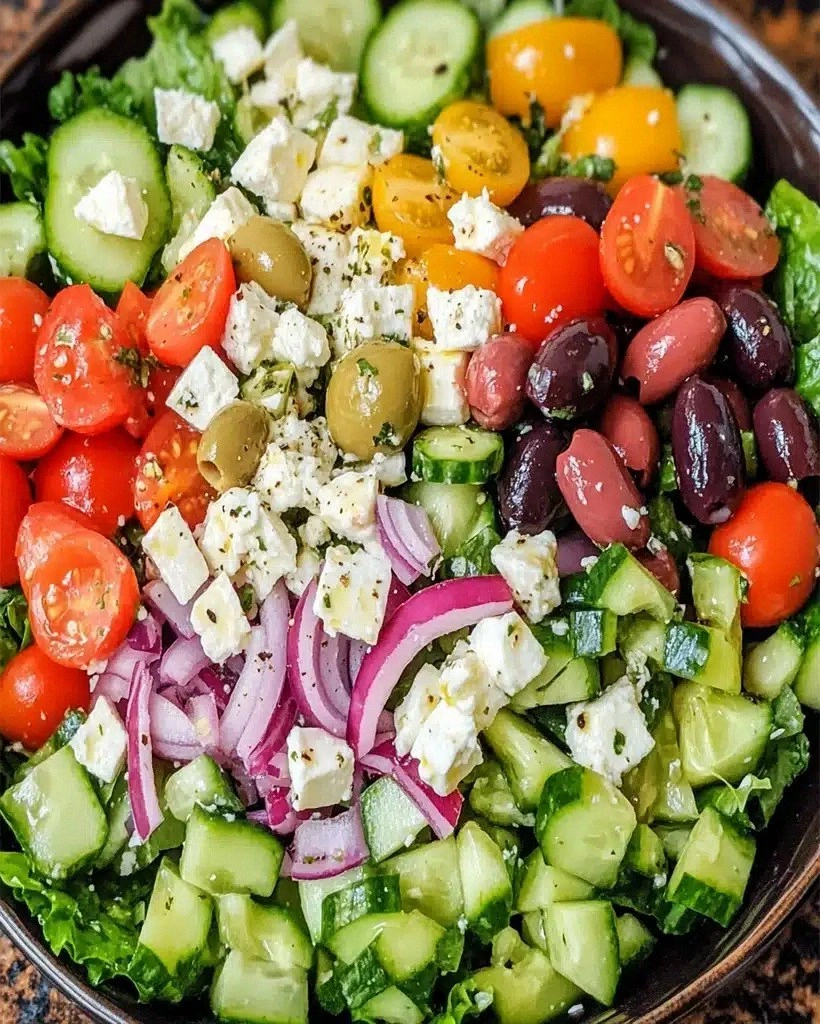
The smell hit me first—sun-warmed tomatoes releasing their perfume in my hot car, mingling with the briny whispers of Kalamata olives and the grassy perfume of fresh oregano. I could practically hear the Aegean waves crashing against white-washed cliffs as I unpacked my treasure trove of ingredients. Picture yourself pulling this out of the oven, the whole kitchen smelling incredible—except there's no oven involved, just the magic of peak-summer produce meeting good olive oil like they're old friends reuniting after decades apart. The colors alone made my mouth water: ruby tomatoes bleeding their juice onto the cutting board, cucumbers so crisp they snapped like fresh celery, and feta so creamy it begged to be stolen before it even hit the bowl.
Here's what most recipes get completely wrong. They treat Greek salad like a sad afterthought—chop some vegetables, dump in bottled dressing, call it a day. But a real Greek salad? It's a celebration of contrast, a dance between sharp and smooth, crisp and creamy, bright and briny. I'll be honest—I ate half the batch before anyone else got to try it, standing over my kitchen counter at midnight, chasing the last bits of feta-soaked tomato juice with crusty bread like some sort of culinary addict. The secret isn't just in the ingredients—though using the right ones transforms everything—but in the timing, the order, the way you treat each component like it matters. Because it does.
This next part? Pure magic. I'm about to show you how to build flavors that'll make your taste buds do a happy dance, how to keep those vegetables crisp even after they've been dressed, and why a proper Greek salad never, ever contains lettuce. Stay with me here—this is worth it. By the time we're done, you'll understand why this humble combination of vegetables and cheese has been feeding families around the Mediterranean for centuries. Let me walk you through every single step—by the end, you'll wonder how you ever made it any other way.
What Makes This Version Stand Out
Flavor Bomb: Most recipes drown everything in dressing, but we build flavor in layers—first a quick salt on the tomatoes draws out their juices, then a garlic-rubbed bowl adds subtle depth, and finally a bright, assertive dressing that coats every piece without weighing it down. The result? Each bite tastes like summer in Santorini, even if you're eating it in your suburban kitchen.
Texture Paradise: Forget those sad, soggy salads. We treat each vegetable differently—cucumbers get a quick salt-and-drain to stay crisp, tomatoes are cut thick enough to hold their shape, and the feta gets broken into chunks (never crumbled) so you get those glorious pockets of creamy saltiness. It's like a party where every guest brings something special to the table.
Weeknight Simple: This comes together in fifteen minutes flat, but tastes like you spent hours sourcing ingredients from a Greek market. No cooking, no complicated techniques—just smart prep that makes everything shine. I make this when I'm too tired to cook but want something that doesn't taste like surrender.
Authentic Edge: Real Greek salad doesn't have lettuce—period. Once you taste how the vegetables mingle without that watery filler, you'll understand why Greeks would laugh at the Americanized versions. Plus we use proper Greek feta (made from sheep's milk) and real Kalamata olives, not those sad black rubbery things from a can.
Crowd Reaction: Every time I serve this, someone asks for the recipe within the first five minutes. It's that perfect combination of familiar flavors made extraordinary, like hearing your favorite song performed live for the first time. Even vegetable skeptics find themselves going back for thirds.
Make-Ahead Magic: While most salads wilt into sadness after an hour, this one actually improves as it sits—up to a point. The vegetables marinate in the dressing, becoming more flavorful without losing their crunch. Perfect for summer entertaining when you want to prep ahead and actually enjoy your guests.
Inside the Ingredient List
The Flavor Base
Tomatoes are the heart and soul here—use the ripest, most fragrant ones you can find. In summer, I go for heirloom varieties that taste like sunshine concentrated into edible form. Winter? Cherry tomatoes work because they're grown for transport and retain flavor better than those sad, pink baseballs masquerading as tomatoes. Cut them into hearty wedges so they hold their shape and don't dissolve into mush when dressed. If you can't smell them from three feet away, keep looking—that perfume is your guarantee of flavor.
Olive oil matters more than you think. This is where you break out the good stuff, the bottle you've been saving for special occasions. A peppery, grassy Greek olive oil will transform this from decent to transcendent. The oil carries all the other flavors, coating your tongue and making everything taste more intense. Skip the mild, neutral oils—this salad needs oil that announces itself with authority, like a Greek grandmother arriving at a family dinner.
The Texture Crew
Cucumbers bring the cool crunch that makes this salad refreshing rather than heavy. English cucumbers work best—they're sweeter, have fewer seeds, and the skin isn't bitter. I peel them in stripes, leaving some skin for color and nutrients, then scoop out the watery center with a spoon. A quick sprinkle of salt and fifteen minutes in a colander draws out excess water, keeping your salad crisp instead of swimming in cucumber juice. Slice them thick enough to provide substantial bite, but not so thick they feel like you're eating watery coasters.
Red onion adds that essential sharp bite, but raw onion can overwhelm everything like that friend who dominates every conversation. The trick is to slice it paper-thin and give it a five-minute bath in red wine vinegar. This mellows the harshness while keeping the crunch, transforming it from bully to team player. If you're an onion skeptic, try this technique—you might actually find yourself adding extra.
The Unexpected Star
Green bell pepper might seem like an odd addition, but it's traditional and adds a particular kind of bitterness that balances the sweet tomatoes. Look for firm, glossy peppers with tight skin—they should snap when you bite into them, not bend like rubber. Remove the white ribs inside, which are bitter in the wrong way, and slice into thin strips that distribute evenly throughout the salad. If you can't find good green peppers, a mild yellow variety works, but avoid red peppers—they're too sweet and change the whole character.
The Final Flourish
Feta cheese is where most people go wrong, reaching for whatever's cheapest. Real Greek feta is made from sheep's milk (sometimes with a little goat), giving it a tangy, complex flavor that cow's milk versions can't touch. It should be sold in brine, not vacuum-packed like plastic. Break it into irregular chunks rather than crumbling—this gives you creamy pockets of saltiness rather than everything tasting uniformly salty. The contrast between sharp dressing and mellow cheese is what makes each bite interesting.
Kalamata olives bring that briny, winey punch that makes the whole salad taste more sophisticated. Buy them with pits—pitted olives are often mushy and taste like the can they came in. The pits actually keep them firm and flavorful. Pit them yourself by smashing with the flat of a knife and pulling out the pit, or leave them in if you're feeling rustic and your guests don't mind a little work for their food.
Everything's prepped? Good. Let's get into the real action...
The Method — Step by Step
- Start with the tomatoes because they need time to release their juices. Cut them into generous wedges—think sixths or eighths depending on size—and place them in a colander set over a bowl. Sprinkle with a teaspoon of kosher salt and let them drain for 15 minutes. That sizzle when the salt hits the tomatoes? Absolute perfection. You're not just removing water; you're concentrating flavor and creating what's essentially a tomato concentrate in the bottom of the bowl.
- While the tomatoes work their magic, tackle the cucumber. Peel it in alternating strips, leaving some skin for color, then slice it in half lengthwise. Use a spoon to scrape out the seeds and watery center—this is the part that makes salads soggy. Slice into half-moons about a quarter-inch thick, then toss with a pinch of salt and let drain in another colander. The cucumber should still snap when you bend it, not flop like a wet noodle.
- Now for the onion alchemy. Slice your red onion as thin as possible—a mandoline helps but isn't necessary. Place the slices in a small bowl and cover with red wine vinegar. Add a pinch of salt and let it sit while you prep everything else. This quick pickle transforms harsh raw onion into something that adds brightness without making you worry about your breath later.
- Time to build the dressing, and here's where we depart from tradition in the best way. Whisk together three parts olive oil to one part red wine vinegar until it emulsifies into something thick and glossy. Add a teaspoon of Dijon mustard—it helps the dressing stay emulsified and adds a subtle complexity. Season with salt, pepper, and a pinch of dried oregano. The dressing should taste assertive—slightly too sharp on its own—because it mellows once it meets the vegetables.
- Rub your serving bowl with a cut clove of garlic, cut side down, until you can just smell it. Don't go overboard—you want a whisper, not a shout. Add the drained tomatoes, cucumbers, and thinly sliced green pepper. Toss gently, being careful not to break up the tomatoes. The vegetables should look glossy and happy to be together, like old friends at a reunion.
- Add the onions (drain them first but don't rinse) and a handful of Kalamata olives. Pour over about two-thirds of the dressing and toss everything together. Let it sit for five minutes—this is when the magic happens. The vegetables start to absorb the dressing while still maintaining their individual characters. Taste and add more dressing if needed; you want everything coated but not swimming.
- Now for the grand finale. Break the feta into irregular chunks over the salad—don't toss yet. The feta should sit on top like snow-capped mountains, waiting to be discovered. Drizzle with a little more olive oil and a final sprinkle of oregano. Serve with crusty bread for sopping up the juices, which might be the best part of the whole experience.
- Bring it to the table and watch what happens. People will poke at it tentatively at first, then go back for seconds, then thirds. Someone will ask for the recipe. Someone else will try to steal the serving bowl to get the last drops of dressing. This is hands down the best version you'll ever make at home, and everyone will know it.
That's it—you did it. But hold on, I've got a few more tricks that'll take this to another level...
Insider Tricks for Flawless Results
The Temperature Rule Nobody Follows
Serve this salad at room temperature, never cold from the fridge. Cold mutes flavors and makes the olive oil thick and waxy. Take it out 30 minutes before serving and let it come to room temp—the difference is like hearing music through headphones versus underwater. A friend tried serving it ice-cold once, and let's just say it didn't end well. She called me afterward asking why it tasted flat. Temperature, my friend. Temperature is everything.
Why Your Nose Knows Best
Before serving, take a big whiff of the salad. It should smell like summer in the Mediterranean—tomato leaves, briny olives, peppery olive oil. If you don't get that hit of aroma, it needs something. Usually more olive oil or a splash of vinegar. Your nose processes flavor before your tongue does, so trust it. I've saved many a salad by trusting my nose over what my eyes were telling me.
The 5-Minute Rest That Changes Everything
After you dress the salad, let it sit for exactly five minutes before adding the feta. This gives the vegetables time to absorb the dressing, but not so long that they start to break down. It's like a quick meditation for vegetables—they relax into their flavors without losing their crunch. Set a timer. Don't guess. Those five minutes are the difference between good and restaurant-quality.
The Bread Trick
Never serve this without good bread. Not just for sopping up the juices (though that's crucial), but because the bread provides a neutral canvas that makes the salad taste even brighter. A crusty sourdough, warmed slightly, rubbed with a cut tomato and drizzled with olive oil turns this side dish into a meal. I've had friends ask if the bread was part of the recipe. It should be.
Creative Twists and Variations
This recipe is a playground. Here are some of my favorite ways to switch things up:
The Protein Punch
Add a handful of cooked shrimp or grilled chicken to turn this side into a main. The key is to keep the protein simple—just olive oil, salt, and lemon—so it doesn't compete with the vegetables. I like to grill shrimp until they're just pink, then toss them in while they're still warm. The heat slightly wilts the tomatoes, creating a different but equally delicious experience.
The Grain Bowl Greek
Spoon the salad over warm farro or bulgur wheat for a heartier version that still feels fresh. The grains soak up the dressing, becoming little flavor bombs. This is my go-to for meal prep—it holds up for days and actually improves in the fridge. Just keep the feta separate until you're ready to eat.
The Spicy Rebel
Add a diced fresh chili pepper—jalapeño for tame heat, serrano for medium, or bird's eye for serious fire. The spice plays beautifully against the cooling vegetables and creamy feta. My spice-loving friend calls this version "Greek salad with attitude," and she's not wrong. Start with half a pepper and work up—you can always add more heat, but you can't take it away.
The Herb Garden
Swap the dried oregano for fresh herbs—basil, mint, dill, or a combination. Fresh herbs make everything taste like you have your own garden (even if you don't). Mint is particularly magical—it makes the whole salad taste somehow more refreshing, like it's been kissed by a cool breeze. Use about three times as much fresh herb as dried.
The Citrus Burst
Replace half the vinegar with fresh lemon juice for a brighter, more summery version. The lemon adds a different kind of acidity—sharper but also somehow sweeter. Add some lemon zest too for extra perfume. This version is what I make when tomatoes are at their peak and I want to taste pure sunshine.
The Winter Warrior
When tomatoes are sad and pale, use cherry tomatoes and add a spoonful of good tomato paste to the dressing. It intensifies the tomato flavor and gives the salad depth even in February. Also, add a pinch more sugar and let the vegetables marinate longer—up to an hour. It won't be summer, but it'll be a lot better than supermarket sadness.
Storing and Bringing It Back to Life
Fridge Storage
Without the feta, this salad keeps for up to three days in an airtight container. The vegetables stay surprisingly crisp, and the flavors meld into something even more delicious. Store the feta separately and add it just before serving. If you've already added the cheese, eat it within 24 hours—the feta will start to break down and get rubbery. Though honestly, I've never had it last that long.
Freezer Friendly
Don't freeze this salad—the vegetables will turn to mush and the dressing will separate into a greasy mess. But you can freeze the dressing separately for up to a month. Just shake it vigorously after thawing, and it's good as new. I like to make a double batch of dressing and freeze half in ice cube trays for quick salads later.
Best Reheating Method
There's no reheating here—this is a cold salad—but you can refresh leftovers. Add a splash of fresh olive oil and vinegar to wake everything up. If the vegetables have lost their crunch, toss in some fresh cucumber or bell pepper to bring back that snap. And always, always let it come to room temperature before serving. A quick 30-second zap in the microwave (just to take the chill off) works in a pinch, but don't tell anyone I said that.