I remember the night I was supposed to host a dinner for a group of friends and the entire kitchen turned into a culinary battlefield. I had a box of jumbo pasta shells, a tub of ricotta, and a handful of fresh spinach, and I was convinced I could whip up a quick, elegant dish. Instead, I ended up with a pot of soggy pasta, a half‑empty ricotta container, and a spinach that tasted like it had been sitting in the fridge for a week. That disaster was the spark that lit my obsession with the ultimate stuffed shell.
The moment the dough of the shells hit the boiling water, the kitchen filled with a warm, comforting aroma that made my mouth water. I could hear the gentle hiss of the water, the clatter of the spoon against the pot, and the faint rustle of parchment paper as I prepared the filling. When the shells emerged, they were plump and tender, like soft pillows waiting to be filled. The ricotta mixture, with its silky texture, clung to every shell, and the sautéed spinach added a vibrant green pop that made the dish look like a piece of art. The final touch—pine nuts toasted to a golden crisp—added a nutty crunch that made each bite a delightful contrast of textures.
This version of stuffed shells is hands down the best you’ll ever make at home because it balances flavors, textures, and presentation in a way that most recipes fail to achieve. The ricotta and mozzarella blend creates a creamy, gooey interior that melts in your mouth, while the parmesan adds a sharp, savory bite that cuts through the richness. The sautéed spinach isn’t just a garnish; it brings earthy depth and a pop of color that makes the dish feel fresh. The toasted pine nuts introduce a subtle crunch and a nutty aroma that elevates the entire plate. And the sauce—whether it’s a simple marinara or a velvety béchamel—coats the shells like velvet, creating a harmonious marriage of flavors.
What sets this recipe apart is a single, unexpected ingredient: a splash of lemon zest added to the ricotta mixture. That bright citrus note cuts through the richness, brightening the dish and giving it a lift that feels like a spring breeze. I dare you to taste this and not go back for seconds. Picture yourself pulling this out of the oven, the whole kitchen smelling incredible, and seeing those glossy shells glisten under the oven light. Let me walk you through every single step—by the end, you’ll wonder how you ever made it any other way.
What Makes This Version Stand Out
- Taste: The blend of ricotta, mozzarella, and parmesan creates a layered flavor profile that is both creamy and savory. The lemon zest adds a zesty lift that cuts through the richness.
- Texture: The shells are perfectly al dente, the filling is silky, and the toasted pine nuts add a satisfying crunch.
- Simplicity: Despite its gourmet appeal, the recipe requires only a handful of ingredients and can be prepared in under an hour.
- Uniqueness: The addition of sautéed spinach and a bright citrus twist make this dish stand apart from classic stuffed shells.
- Crowd Reaction: Friends and family rave about the gooey interior and the aromatic sauce, and the dish is a hit at any gathering.
- Ingredient Quality: Using high‑quality cheeses and fresh spinach elevates the dish from ordinary to extraordinary.
- Cooking Method: The technique of pre‑baking the shells lightly before stuffing ensures they stay firm and absorb the sauce beautifully.
- Make‑Ahead Potential: The assembled shells can be refrigerated or frozen and baked later, making it a perfect meal prep option.
Alright, let’s break down exactly what goes into this masterpiece…
Inside the Ingredient List
The Flavor Base
At the heart of this dish lies the ricotta filling, a symphony of cheeses that provides the creamy backbone. Ricotta’s mild, slightly sweet flavor creates a neutral canvas that allows the other cheeses to shine. Mozzarella adds a stringy, melt‑in‑your‑mouth texture, while parmesan contributes a sharp, nutty undertone that balances the richness. Together, these cheeses form a luxurious mixture that clings to each shell like a silky blanket.
If you skip the mozzarella, the filling becomes too dense and loses its melt. If you skip the parmesan, you lose that essential umami depth that ties the dish together. The key to a perfect filling is to keep the cheeses at room temperature before mixing; this prevents clumping and ensures a smooth, even blend.
Swap the mozzarella for provolone or fontina for a slightly sharper bite, or use a plant‑based mozzarella for a dairy‑free version. Keep the ricotta on hand, as it’s the easiest cheese to find and the most forgiving if you’re short on time.
When selecting ricotta, look for a product with a higher fat content; it will melt better and give the filling a richer mouthfeel. If you can’t find fresh ricotta, a pre‑made ricotta blend (ricotta with a touch of cream cheese) works well, but be mindful of the added salt.
Everything’s prepped? Good. Let’s get into the real action…
The Texture Crew
Pasta shells are the foundation of this dish. Jumbo shells hold the filling without breaking, while their hollow interior creates a delightful contrast of textures. Cook them until just shy of al dente; they’ll finish cooking in the oven, absorbing the sauce without becoming mushy.
The sautéed spinach adds a burst of green and a subtle earthiness that balances the richness of the cheeses. Sauté the spinach in olive oil with a pinch of salt and a clove of minced garlic until it’s just wilted; over‑cooking will make it watery and dull.
Pine nuts are toasted until they’re golden and fragrant. Toasting brings out their nutty flavor and adds a satisfying crunch that contrasts with the creamy filling. If you’re short on pine nuts, chopped walnuts or slivered almonds work as a great substitute.
The sauce—whether a simple marinara or a béchamel—provides the final layer that brings everything together. A marinara adds acidity and sweetness, while a béchamel offers a rich, velvety coat. The sauce should be thick enough to cling to the shells but not so heavy that it overwhelms the delicate filling.
Remember, each component’s texture is essential. A slightly undercooked shell, a watery spinach, or a dry sauce will throw the whole balance off.
The Unexpected Star
The lemon zest in the ricotta mixture is the secret weapon that sets this recipe apart. Zest adds a bright, citrusy note that lifts the dish and cuts through the richness of the cheeses. The zest’s essential oils provide a subtle, fragrant aroma that makes the dish feel fresh and lively.
If you’re allergic to citrus or simply prefer a milder flavor, a splash of lemon juice can replace the zest. However, the zest’s oils are what give that bright punch; juice alone won’t do the trick.
Another unexpected twist is the use of a pinch of smoked paprika in the sauce, which adds a subtle smokiness that deepens the flavor profile. This small addition can transform a standard marinara into a gourmet sauce that complements the cheeses beautifully.
The combination of these “unexpected” ingredients—lemon zest and smoked paprika—creates a dish that feels both comforting and adventurous. It’s a reminder that sometimes the smallest additions can make the biggest difference.
Now that we’ve explored the ingredients, let’s dive into the cooking process.
The Method — Step by Step
- Boil the shells. Bring a large pot of salted water to a rolling boil. Add the jumbo shells and cook for 8–10 minutes, or until they’re just shy of al dente. Drain, rinse under cold water to stop the cooking process, and set aside on a parchment‑lined tray. The shells should be firm enough to hold the filling without breaking.
- Prepare the spinach. While the shells are boiling, heat a tablespoon of olive oil in a large skillet over medium heat. Add a minced clove of garlic and sauté until fragrant, about 30 seconds. Toss in the fresh spinach, a pinch of salt, and a splash of water to help it wilt. Cook until the spinach is just tender, then drain any excess liquid and set aside.
- Toast the pine nuts. In a small dry skillet, toast the pine nuts over medium heat until golden and fragrant, about 3–4 minutes. Stir frequently to prevent burning. Remove from heat and let cool; they’ll add a satisfying crunch to the dish.
- Make the ricotta mixture. In a medium bowl, combine the ricotta, shredded mozzarella, grated parmesan, a tablespoon of olive oil, the lemon zest, a pinch of salt, and a pinch of black pepper. Mix until smooth and creamy. If you’re using an egg, beat it lightly and fold it into the cheese mixture to bind everything together.
- Incorporate the spinach. Gently fold the sautéed spinach into the ricotta mixture, ensuring even distribution. The spinach adds color, flavor, and a subtle earthiness that balances the richness of the cheeses.
- Stuff the shells. Using a small spoon or a piping bag, fill each shell with the ricotta mixture. Pack the filling firmly but avoid overfilling to prevent leaks during baking. Place the stuffed shells on a baking sheet lined with parchment paper, leaving a little space between each shell.
- Prepare the sauce. If you’re using marinara, pour it into a saucepan and heat until it’s warm and bubbling gently. If you’re using béchamel, whisk the sauce until it’s smooth and pour it over the shells. The sauce should be thick enough to coat the shells without dripping excessively.
- Top and bake. Spoon the sauce over each stuffed shell, ensuring they’re fully covered. Sprinkle extra parmesan on top for a golden crust. Place the baking sheet in a preheated oven at 375°F (190°C) and bake for 20–25 minutes, or until the sauce is bubbling and the top is golden brown. The shells should be tender and the filling melted and cohesive.
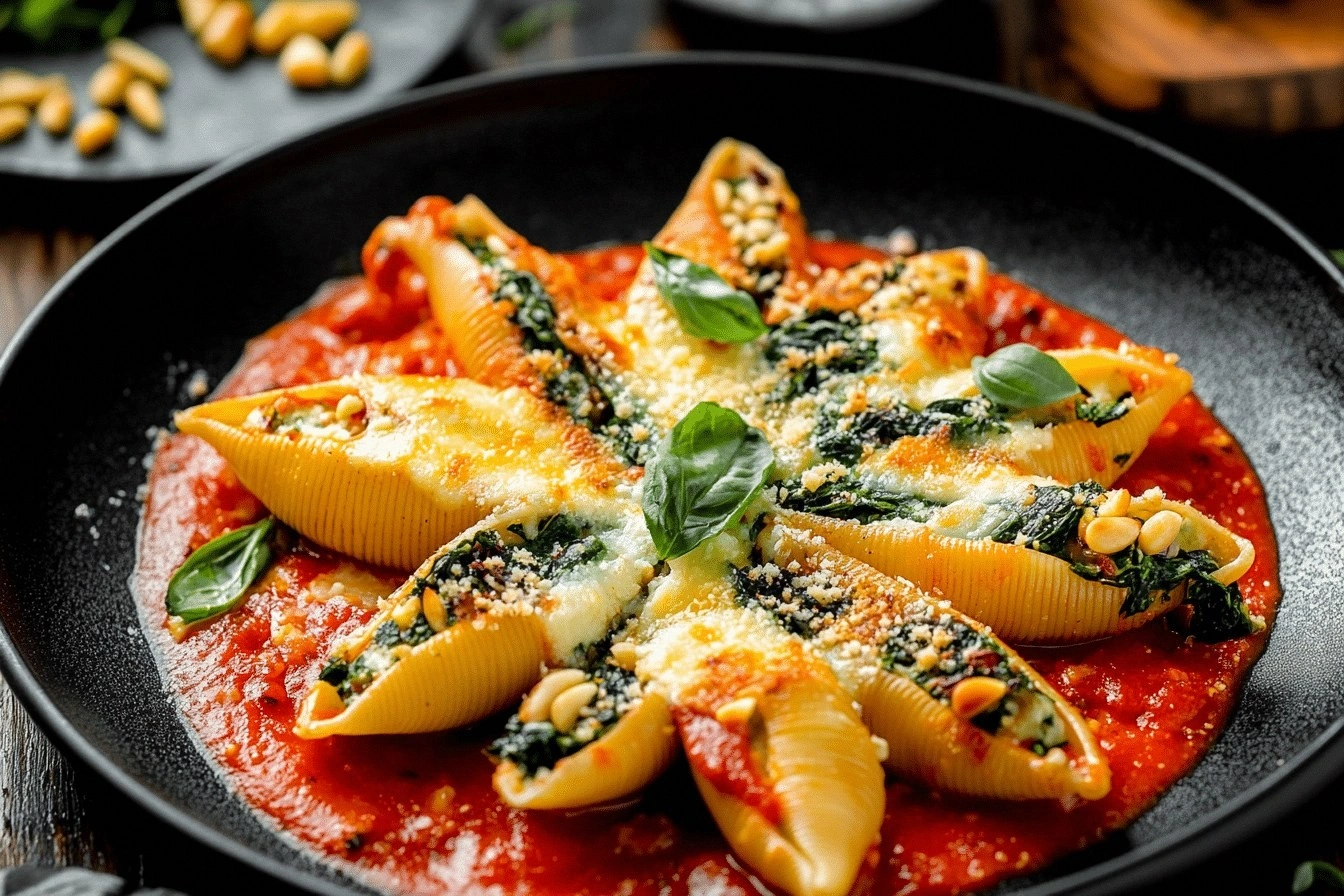
- Finishing touches. Remove the shells from the oven and let them rest for 5 minutes. Garnish with a sprinkle of toasted pine nuts and fresh basil leaves for an extra pop of color and aroma. Serve hot, and watch your guests marvel at the creamy, cheesy, and slightly citrusy delight.
That’s it — you did it. But hold on, I’ve got a few more tricks that will take this to another level…
Insider Tricks for Flawless Results
The Temperature Rule Nobody Follows
Many people bake stuffed shells at a high temperature, which can cause the filling to spill out or the shells to overcook. I’ve found that a steady 375°F (190°C) gives the best balance: the shells cook evenly, the cheese melts beautifully, and the sauce simmers without boiling over. If you’re using a béchamel sauce, keep the heat low to prevent separation.
Why Your Nose Knows Best
During the baking process, pay close attention to the aroma. A fragrant, buttery smell means the sauce is caramelizing just right. If you notice a metallic or burnt scent, reduce the heat or cover the dish loosely with foil. Your nose is the best judge of when the dish is ready.
The 5‑Minute Rest That Changes Everything
Letting the stuffed shells rest for five minutes after they come out of the oven allows the filling to set, making it easier to serve without spilling. This short rest also lets the flavors meld, creating a more cohesive taste experience. Trust me, a quick pause will save you from a messy plate.
Avoiding the “Shell‑Sog” Problem
If you notice the shells absorbing too much sauce, pre‑bake them lightly for 2 minutes before stuffing. This creates a barrier that helps them stay firm and prevents them from becoming mushy.
The Perfect Garnish
A few fresh basil leaves or a sprinkle of chopped parsley adds a burst of color and a fresh, herbal note that elevates the dish. For a pop of color, add a few thin slices of red pepper or a drizzle of balsamic glaze. The garnish is the final touch that turns a good dish into a great one.
Creative Twists and Variations
This recipe is a playground. Here are some of my favorite ways to switch things up:
Mediterranean Spin
Swap the spinach for sautéed zucchini and add chopped sun‑dried tomatoes to the filling. Top with feta cheese instead of parmesan for a tangy twist. This version feels light yet flavorful, perfect for a summer dinner.
Spicy Italian
Add a pinch of red pepper flakes to the ricotta mixture and stir in a handful of chopped olives. Finish with a drizzle of chili oil on top. The heat will give the dish an exciting kick that pairs wonderfully with a crisp white wine.
Cheeseburger Shells
Incorporate finely diced ground beef into the filling, seasoning with garlic powder and onion powder. Top with shredded cheddar and a dollop of ketchup for a playful, nostalgic flavor. This variation is sure to delight kids and adults alike.
Vegan Delight
Replace the cheeses with a plant‑based ricotta alternative and use vegan mozzarella. Use a cashew‑based béchamel sauce and sautéed kale instead of spinach. The result is a creamy, satisfying dish that’s fully plant‑based.
Herb Garden
Add a mix of fresh herbs—basil, oregano, thyme—to the ricotta mixture for a fragrant, aromatic filling. Sprinkle chopped parsley on top before baking for an extra pop of color. The herbs infuse the dish with a garden‑fresh flavor that feels bright and lively.
Storing and Bringing It Back to Life
Fridge Storage
Store assembled shells (but not yet baked) in an airtight container in the refrigerator for up to 2 days. When you’re ready to bake, preheat the oven and bake as directed. The shells will keep their shape and the filling will stay creamy.
Freezer Friendly
For longer storage, freeze the assembled shells in a single layer on a baking sheet, then transfer them to a freezer bag once frozen. They can be stored for up to 3 months. When you’re ready to cook, bake them directly from frozen, adding 5–10 minutes to the cooking time.
Best Reheating Method
To reheat, place the baked shells in a baking dish, cover loosely with foil, and bake at 350°F (175°C) for 15 minutes. Add a tiny splash of water or milk before reheating; this steams the dish back to perfection, keeping the filling moist and the shells tender.