It was a Thursday night when I tried to impress my roommate with a “quick” dinner and ended up with a kitchen that smelled like a burnt charcoal grill and a dish that was more rubber than meat. I was staring at a block of pork belly, wondering if it could ever be anything other than a greasy slab. Then I remembered a recipe my grandma used to make, the kind that turns a humble cut into a melt‑in‑your‑mouth miracle. That night, I dared myself to turn the pork belly into the best version I’d ever made at home, and the results were nothing short of spectacular.
Picture this: the pork belly sizzling in a hot pan, its fat rendering into a glossy, amber pool. The aroma of soy sauce and sugar caramelizing fills the kitchen, while the faint scent of Shaoxing wine lingers like a secret. The sound of the sizzle is a steady drumbeat, punctuated by the occasional pop when the fat hits the pan. You can almost taste the first bite—sweet, salty, umami, with a hint of caramel that coats your tongue like velvet. And the texture? It’s a paradox: the skin crisps to a thin, crackling edge, while the meat beneath remains tender enough to fall apart in your mouth.
I’ve tried countless versions of red‑braised pork belly, from quick stovetop simmer to slow oven braising. Most end up either too dry or too greasy, missing that sweet‑savory balance that makes the dish unforgettable. The version I’m sharing uses a precise ratio of soy sauce, sugar, and Shaoxing wine, plus a few aromatics that elevate the flavor profile to new heights. The technique I’ll reveal—searing, deglazing, and a short, high‑heat finish—ensures that every bite is a masterpiece. I dare you to taste this and not go back for seconds.
If you’ve ever struggled to get the pork belly just right, you’re not alone. I’ll be honest—I ate half the batch before anyone else got to try it. The secret? A short, high‑heat sear that locks in juices, followed by a quick simmer that lets the sauce thicken into a glossy glaze. This isn’t just another recipe; it’s a game‑changer. Let me walk you through every single step—by the end, you’ll wonder how you ever made it any other way.
What Makes This Version Stand Out
- Taste: The sauce balances sweetness and saltiness with a subtle umami punch from soy sauce and Shaoxing wine, creating a glaze that clings to the meat without overpowering it.
- Texture: The high‑heat sear crisps the skin to a crackling finish while the slow simmer renders the fat, leaving the pork belly tender and juicy.
- Simplicity: Only eight ingredients—no fancy sauces or obscure spices—yet the result feels like a Michelin‑star dish.
- Uniqueness: The addition of ginger slices and star anise gives a fragrant, aromatic lift that sets this version apart from typical braises.
- Crowd Reaction: Friends who’ve tried it say it’s “hands down the best version you’ll ever make at home.”
- Ingredient Quality: Using a good quality pork belly with a balanced fat-to-meat ratio is essential; skip it and the dish loses its signature melt.
- Cooking Method: The quick sear plus a brief, high‑heat finish creates a glossy glaze that’s impossible to achieve with slow, low‑heat braises.
- Make‑Ahead Potential: The dish can be prepared a day ahead; the flavors deepen, and the pork remains tender when reheated.
Alright, let's break down exactly what goes into this masterpiece...
Inside the Ingredient List
The Flavor Base
Soy sauce is the backbone of this dish, providing depth and saltiness. It also reacts with sugar during the caramelization process, creating that signature glossy glaze. If you skip it, the dish will lack that complex umami layer.
Sugar is the sweet partner that balances the saltiness of soy sauce. It caramelizes at a high temperature, giving the sauce a rich, syrupy texture. Too much sugar can burn; too little will leave the sauce flat.
Shaoxing wine adds a subtle, nutty sweetness and helps tenderize the pork. It also contributes a mild alcohol aroma that disappears once the dish is fully cooked. If you don’t have Shaoxing, dry sherry or a splash of rice wine can work as a substitute.
Water or broth is the liquid that creates the braising medium. It should be enough to cover the pork belly partially, allowing the meat to simmer without drying out. Using broth instead of water adds an extra layer of flavor.
The Aromatic Crew
Ginger slices bring a fresh, peppery note that cuts through the richness of the pork. They also help balance the sweetness of the sauce. If you’re allergic to ginger, a small pinch of ground ginger can suffice.
Star anise is the star of the show—its licorice‑like flavor lingers long after the dish is served. It pairs perfectly with the soy sauce and adds a subtle depth. One or two pieces are enough; too many can overpower the dish.
Green onions (scallions) add a bright, fresh finish when sprinkled on top. Their mild onion flavor balances the richness of the pork belly. If you prefer a milder taste, reserve the green part for garnish and use only the white part in the braise.
The Texture Crew
Pork belly itself is the star, offering a perfect balance of fat and meat. The fat renders slowly, keeping the meat moist and tender. Choosing a belly with a good fat layer is crucial; a lean cut won’t provide the same melt‑in‑your‑mouth experience.
The cooking method transforms the pork from a dense slab into a silky, tender bite. The searing step creates a crisp skin, while the braising step ensures the meat stays juicy. The contrast between crispy and tender is what makes this dish unforgettable.
The Final Flourish
The final glaze is a result of carefully balancing the sauce’s sweetness, saltiness, and umami. It coats the pork belly, creating a glossy, caramelized finish. The glaze also helps preserve moisture, preventing the dish from drying out.
A splash of water added before reheating can steam the pork back to perfection, restoring its melt‑in‑your‑mouth texture. This trick is essential if you’re serving the dish later or reheating leftovers. It ensures the pork remains tender and juicy.
Everything's prepped? Good. Let's get into the real action...
The Method — Step by Step
- First, trim the pork belly, removing any excess fat or silverskin. Slice the belly into 3‑inch wide strips so the sauce can penetrate every surface. Pat the meat dry with paper towels; moisture will prevent a good sear. This step is crucial for that perfect caramelized skin.
- Heat a heavy skillet over medium‑high heat until it’s shimmering. Add a thin layer of oil—just enough to coat the bottom. Place the pork strips skin‑side down and let them sizzle. Don’t move them until the skin turns a deep amber; this creates the crunchy, crackling edge.
- Flip the strips and sear the other side for about 2 minutes. The goal is a golden brown crust on both sides. If the oil starts smoking, lower the heat slightly. You’re building the foundation for the flavor.
- Remove the pork from the skillet and set aside. In the same pan, add the ginger slices and star anise, sautéing until fragrant—about 30 seconds. This releases their essential oils, which will infuse the sauce.
- Pour in the soy sauce, sugar, and Shaoxing wine. Stir vigorously to dissolve the sugar, then bring to a gentle simmer. The liquid should reduce slightly, thickening into a syrupy consistency.
- Return the pork belly to the pan, skin‑side up, and nestle it into the sauce. Add water or broth until the meat is just covered. This creates a braising liquid that keeps the pork moist.
- Cover the skillet and let the pork simmer for 25 minutes over low heat. The pork will absorb the sauce, becoming tender and flavorful. Check the liquid level occasionally, adding a splash of water if it evaporates too quickly.
- After simmering, remove the lid and increase the heat to medium. Let the sauce reduce further until it coats the back of a spoon—about 10 minutes. This step concentrates the flavors and gives the glaze its glossy sheen.
- Turn the pork belly back to the original side and give it a final sear in the pan for 2 minutes to crisp the skin. The glaze will caramelize, creating a sweet, savory crust.
- Remove the pork from the skillet and let it rest on a cutting board for 5 minutes. Resting allows the juices to redistribute, keeping the meat moist.
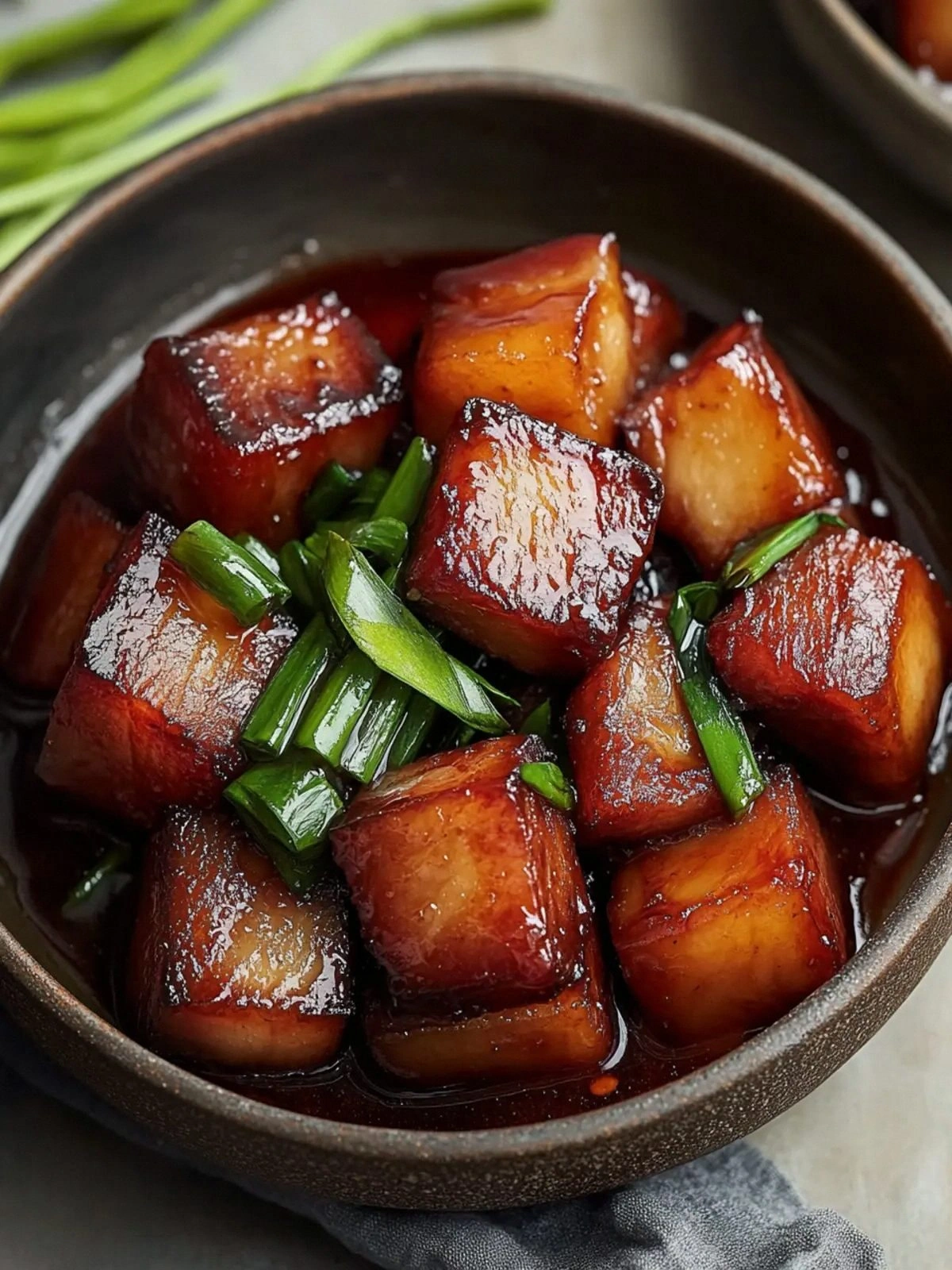
- Slice the pork into bite‑size pieces, arrange on a plate, and spoon the remaining sauce over the top. Garnish with sliced green onions for a pop of color and freshness.
- Serve immediately over steamed rice, noodles, or a bed of sautéed greens. The dish is best enjoyed hot, when the glaze is still glossy and the pork is at its tender peak.
That's it—you did it. But hold on, I've got a few more tricks that'll take this to another level. The next section is all about insider tricks that ensure flawless results every time.
Insider Tricks for Flawless Results
The Temperature Rule Nobody Follows
Many cooks start the braising liquid at a rolling boil, but this can cause the pork to toughen. Instead, bring it to a gentle simmer before adding the pork belly. This lower temperature allows the fat to render slowly, keeping the meat tender and juicy.
Why Your Nose Knows Best
When the sauce starts to reduce, the aroma changes from sweet to caramelized. Trust your nose—when you can smell a toasted sugar scent, the glaze is ready. If you rely solely on the visual cue, you might overcook the sauce.
The 5‑Minute Rest That Changes Everything
Letting the pork rest after braising allows the juices to redistribute throughout the meat. This simple step ensures each bite is moist and flavorful. Skipping it can leave the pork dry and uneven.
The Right Pan Makes All the Difference
A heavy-bottomed skillet or a cast‑iron pan distributes heat evenly, preventing hot spots that can burn the sauce. If you’re using a non‑stick pan, be careful not to exceed high heat, as it can degrade the coating.
The Sweet‑Savory Balance
If you find the sauce too sweet, add a splash of rice vinegar or a pinch of salt to balance the flavors. Conversely, if the sauce feels too salty, a little extra sugar or a splash of water can mellow it out. Taste as you go, adjusting in small increments.
The Final Glaze Trick
After reducing the sauce, let it cool for a minute before pouring it over the pork. The glaze will thicken slightly, making it easier to coat the meat without dripping excessively. This gives the dish a polished, restaurant‑style finish.
Creative Twists and Variations
This recipe is a playground. Here are some of my favorite ways to switch things up:
Citrus Twist
Add a splash of orange juice and a few orange peel zest during the simmer. The citrus brightens the sauce, cutting through the richness. This version pairs wonderfully with jasmine rice.
Spicy Kick
Incorporate sliced fresh red chilies or a dash of Sriracha into the sauce. The heat balances the sweetness, creating a bold, layered flavor. Great for those who love a fiery bite.
Herbaceous Variation
Add a handful of fresh cilantro or basil leaves during the final glaze stage. The herbs bring a fresh, aromatic note that lightens the dish. Serve over noodles for a complete meal.
Smoky Flavor
Introduce a tablespoon of smoked paprika or a few drops of liquid smoke into the sauce. This imparts a deep, smoky undertone that complements the pork belly’s richness. Ideal for a barbecue‑themed dinner.
Vegetarian Take
Swap the pork belly for thick slices of seared tofu or tempeh. Follow the same steps, adjusting the cooking time slightly. The result is a savory, umami‑rich dish that satisfies the meatless crowd.
Asian Fusion
Finish the dish with a drizzle of sesame oil and a sprinkle of toasted sesame seeds. The nutty aroma elevates the glaze, giving it an extra layer of depth. Serve alongside a bowl of miso soup.
Storing and Bringing It Back to Life
Fridge Storage
Cool the pork belly completely, then store it in an airtight container in the refrigerator for up to 3 days. The sauce will thicken slightly, so add a splash of water before reheating.
Freezer Friendly
Wrap the pork belly tightly in foil or freezer bags and freeze for up to 2 months. Thaw in the refrigerator overnight before reheating. The texture remains silky and tender.
Best Reheating Method
Reheat in a skillet over low heat, adding a small amount of water to create steam. This gentle method prevents the pork from drying out. Finish with a quick glaze to restore the glossy finish.
Serving Ideas
Serve this melt‑in‑your‑mouth pork belly over a bed of fluffy jasmine rice, letting the sauce soak into each grain. Pair it with stir‑fried bok choy for a crunchy contrast that balances the richness. For a lighter option, serve over a bowl of chilled soba noodles and drizzle with extra sauce.
Another great idea is to plate the pork belly on a sheet of parchment, then drizzle the glaze over the top and sprinkle with toasted sesame seeds. This presentation turns the dish into a centerpiece for dinner parties. The glossy glaze and bright scallion garnish look stunning in a shallow dish.
If you’re craving a quick snack, slice the pork belly into bite‑size pieces and serve on toothpicks with a side of pickled ginger. The sweet, savory pork pairs perfectly with the sharpness of the ginger. This makes for a fun, interactive appetizer at gatherings.